

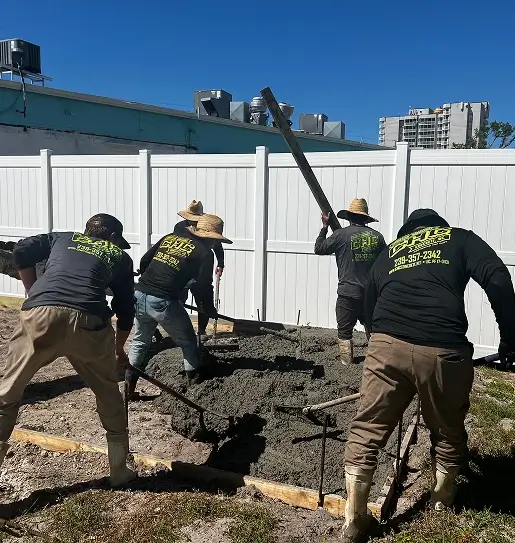
When you search for concrete resurfacing near me, you’ll get a long list of contractors, some licensed, some not, and some who disappeared from their last job mid-pour. The problem isn’t finding options. It’s knowing which ones are worth your money and, more importantly, your trust.
Concrete resurfacing can restore a worn-out driveway, patio, or pool deck without the cost of a full tear-out and replacement. But the results depend almost entirely on who does the work. A bad contractor cuts corners on surface prep, skips bonding agents, or applies an overlay too thin to hold up through a single Southwest Florida summer. Within months, you’re back to square one, peeling, cracking, and calling someone else to fix the mess. That’s a scenario we see regularly at CHC Concrete when homeowners in Fort Myers, Cape Coral, Estero, and Bonita Springs reach out after a previous job failed.
This article breaks down what concrete resurfacing actually involves, what it costs, and, most critically, how to vet the contractors who show up in your search results. We’ll cover licensing, insurance, red flags, and the specific questions you should ask before signing anything. By the end, you’ll have a clear framework for choosing the right contractor the first time.
What concrete resurfacing is and when it works
Concrete resurfacing is the process of applying a thin bonding layer of material over an existing slab to restore its appearance and function. Instead of breaking up and removing the old concrete, a contractor cleans the surface, repairs visible cracks, and applies a new overlay on top. When done correctly, the result looks and performs like new concrete at a fraction of the replacement cost.
The process in plain terms
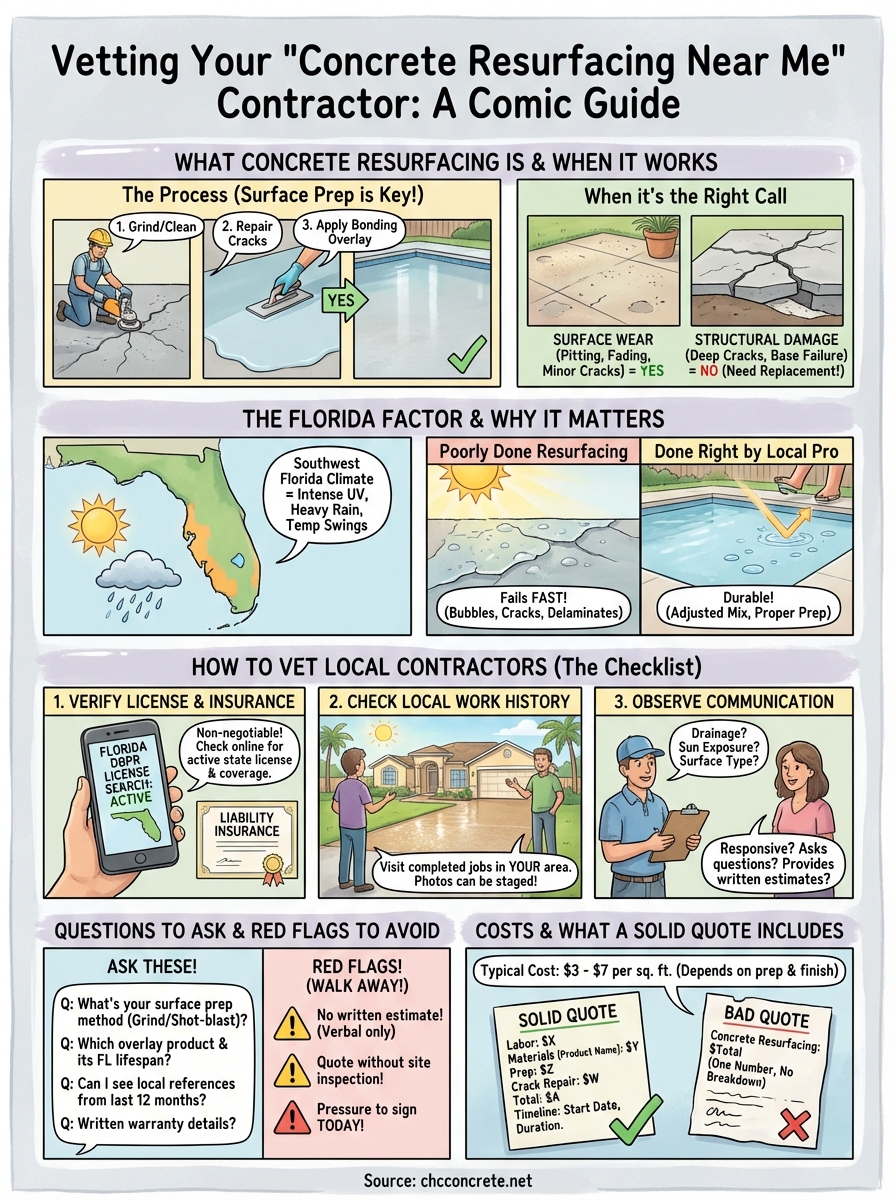
The work starts with surface preparation, which is the most critical step in any resurfacing job. A contractor grinds or pressure washes the slab to remove dirt, oils, and loose material, then fills cracks with a flexible filler before applying a bonding agent. After that, the overlay goes on, typically a polymer-modified cement mix that bonds tightly to the existing surface. Curing time varies by product and weather, but most surfaces need at least 24 to 48 hours before foot traffic resumes.
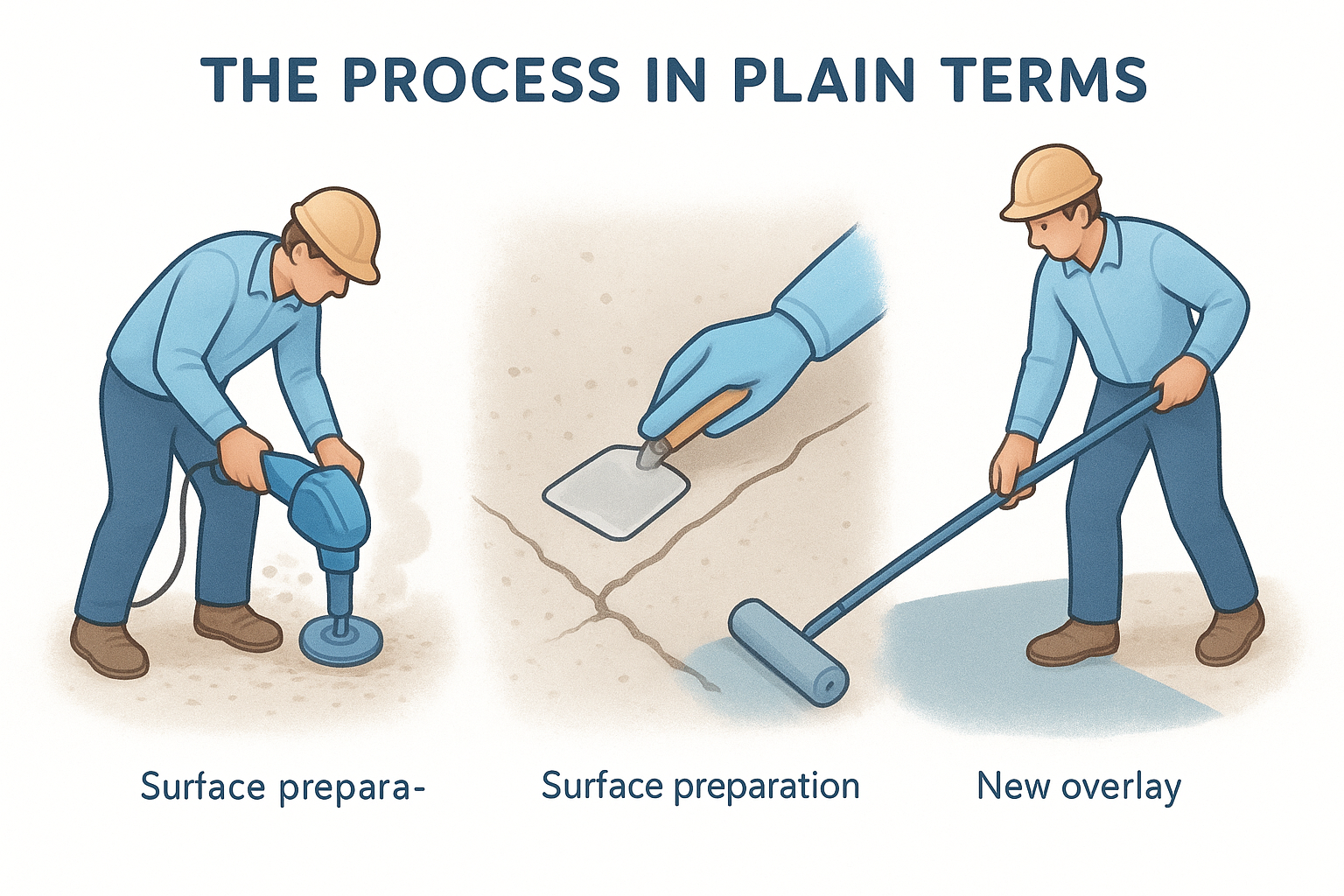
Skipping surface preparation is the single most common reason concrete resurfacing fails within the first year.
When resurfacing is the right call
Resurfacing works when your slab is structurally sound but shows surface-level wear such as pitting, scaling, minor cracking, or fading. If you’re searching for concrete resurfacing near me because your pool deck is peeling, your driveway looks washed out, or your patio has surface cracks from root damage, resurfacing is likely a viable fix. However, if the slab has deep structural cracks, significant settling, or signs of base failure underneath, an overlay will not hold. In those cases, full replacement is the correct path, and any contractor who tells you otherwise without inspecting the base is giving you incomplete advice.
Why your contractor choice matters in Florida
Concrete resurfacing near me searches in Southwest Florida carry more weight than the same search in, say, Ohio. Florida’s climate creates conditions that expose every weakness in a poorly done resurfacing job faster than almost anywhere else in the country. Choosing the wrong contractor doesn’t just waste money. It accelerates failure.
Florida’s climate is harder on concrete than most
Southwest Florida delivers intense UV exposure, heavy seasonal rainfall, and rapid temperature swings that stress concrete overlays constantly. A thin or improperly bonded overlay will bubble, delaminate, or crack within a single wet season. Pool decks face even more pressure from pool chemicals, foot traffic, and constant moisture cycles. Contractors who learned their trade in other states often underestimate how quickly materials break down here if the mix design, thickness, and curing process aren’t adjusted for the local environment.
A contractor who doesn’t ask about your drainage situation or sun exposure before quoting you hasn’t thought through the job.
Licensing and insurance are non-negotiable
Florida requires concrete contractors to hold a valid state license, which you can verify through the Florida Department of Business and Professional Regulation. Unlicensed workers carry no liability, meaning any damage to your property or injuries on-site fall on you.
How to vet local concrete resurfacing contractors
When you run a concrete resurfacing near me search, start with verification, not price. Every contractor on your shortlist should provide a valid Florida license number and current liability insurance before the conversation goes further. Confirm the license is active on the Florida DBPR site and covers concrete work specifically, not just general contracting.
Check their work history in your area
Ask each contractor for references from completed jobs in your region, whether that’s Fort Myers, Cape Coral, or Bonita Springs. Local references matter because you can physically visit the work and see how it has held up over a full Florida wet season. A photo on a website is easy to stage; a driveway two miles away is not.
A contractor who can’t name a single verifiable local job is not worth your time.
Look at how they communicate upfront
How a contractor handles your first call or estimate tells you exactly how they’ll manage your project. Do they ask about your surface type, drainage, and sun exposure? A contractor who skips those questions hasn’t thought through the full scope of your job, which means you’ll absorb the cost of that gap later.
Responsive contractors show up on time, provide written estimates with line-item detail, and answer follow-up questions without pressure.
Questions to ask and red flags to avoid
Before you hire anyone from your concrete resurfacing near me search, ask them a short list of direct questions. Their answers reveal whether they actually understand the work or are just chasing the job.
Questions worth asking before you commit
The right contractor will answer these without hesitation. Ask about surface preparation methods, specifically whether they grind or shot-blast the slab before applying the overlay. Ask what overlay product they use and why it suits your surface type and local conditions. Ask for a written warranty and confirm what it covers.
- What’s your prep process before applying the overlay?
- Which overlay product do you use, and what’s its expected lifespan in Florida?
- Can you provide references from local jobs completed in the past 12 months?
Red flags that tell you to walk away
Some warning signs are obvious; others are easy to miss. No written estimate is a serious problem, full stop. Walk away from any contractor who quotes verbally and refuses to put numbers on paper. A contractor who skips a site inspection and quotes over the phone without seeing your surface hasn’t assessed whether resurfacing is even the right solution for your slab.
If a contractor pressures you to sign the same day you meet them, that pressure is the only thing they’re actually selling.
Costs, timelines, and what a solid quote includes
Most concrete resurfacing near me projects run between $3 and $7 per square foot, depending on surface condition, overlay type, and the scope of prep work required. Pool decks and decorative finishes sit at the higher end. Basic driveway or patio overlays with no color work tend to cost less. Timeline is typically one to three days for residential jobs, with an additional 24 to 48 hours of curing before the surface handles foot or vehicle traffic.
Don’t use price as your primary filter. A $2-per-square-foot quote usually signals skipped prep or inferior materials.
What a solid quote looks like
A legitimate quote breaks down labor and materials separately and specifies the overlay product by name. It lists surface preparation steps, crack repair scope, and curing requirements. If a contractor hands you a single-line total with no breakdown, that’s a number with no accountability behind it, not a real quote.
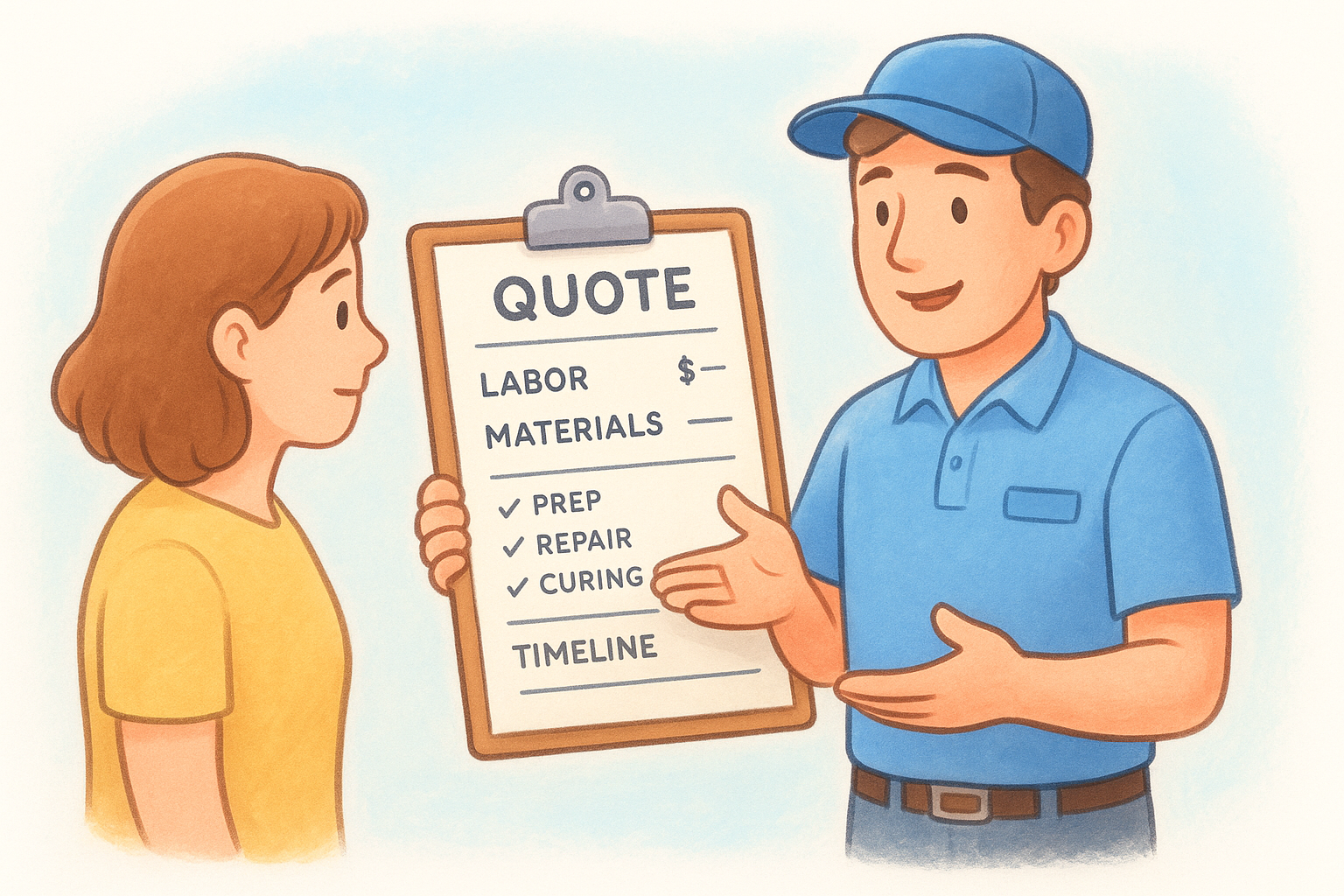
Your quote should also include a project timeline with a realistic start date, not a vague “within two weeks.” Contractors who build detailed quotes are showing you how they think. That clarity carries directly into how they run the job once work begins.
A simple way to move forward today
You now have everything you need to turn a concrete resurfacing near me search into a confident hiring decision. Check licenses, visit local jobs, ask direct questions about prep and materials, and read every quote line by line before you sign. Those steps take less than an hour and save you from a failed overlay that costs twice as much to fix.
If you’re in Fort Myers, Cape Coral, Estero, or Bonita Springs, CHC Concrete handles residential resurfacing projects with the surface preparation and material choices that actually hold up in Southwest Florida’s climate. Every estimate is written, detailed, and based on an in-person inspection of your slab, not a number pulled from a phone call.
Request a free concrete resurfacing estimate from CHC Concrete and get a clear picture of what your project actually involves before any work begins.