


If you’ve ever walked barefoot across a pool deck in Southwest Florida during summer, you already know the problem. Concrete absorbs heat, and by midday, surface temperatures can easily exceed 150°F. That’s where the question comes in: what is cool deck coating, and can it actually make a difference? The short answer is yes, and it’s one of the most practical upgrades you can make to an existing pool deck. Cool deck coatings are textured, light-reflective surface treatments designed to lower the temperature of concrete exposed to direct sunlight.
At CHC Concrete, we install and resurface pool decks across Fort Myers, Cape Coral, Estero, and Bonita Springs. We work with these coatings regularly because they solve a real, everyday problem for homeowners in this climate. Intense UV exposure and long summers make standard concrete uncomfortable and sometimes unsafe to walk on barefoot. A cool deck coating addresses both issues, reducing surface heat while adding slip resistance.
This article breaks down exactly how cool deck coatings work, what they’re made of, how they compare to other resurfacing options, and what to consider before having one applied. Whether you’re building a new pool deck or looking to upgrade an existing one, this will give you the information you need to make a confident decision. No guesswork, no unnecessary jargon, just the facts.
Why cool deck coating matters for pool decks in Florida
Florida’s climate is not like most of the country. Southwest Florida gets an average of 260 sunny days per year, and summer temperatures regularly push into the mid-90s. That heat doesn’t just make you uncomfortable. It transfers directly into your concrete pool deck, turning it into a surface that can burn bare feet within seconds.
The heat problem with standard concrete
Standard concrete is a poor reflector of solar energy. It absorbs heat throughout the day and holds it, meaning your pool deck stays dangerously hot well into the evening. Surface temperatures on uncoated gray concrete can reach 150°F to 160°F on a typical Florida summer afternoon, which is hot enough to cause burns from brief direct skin contact.
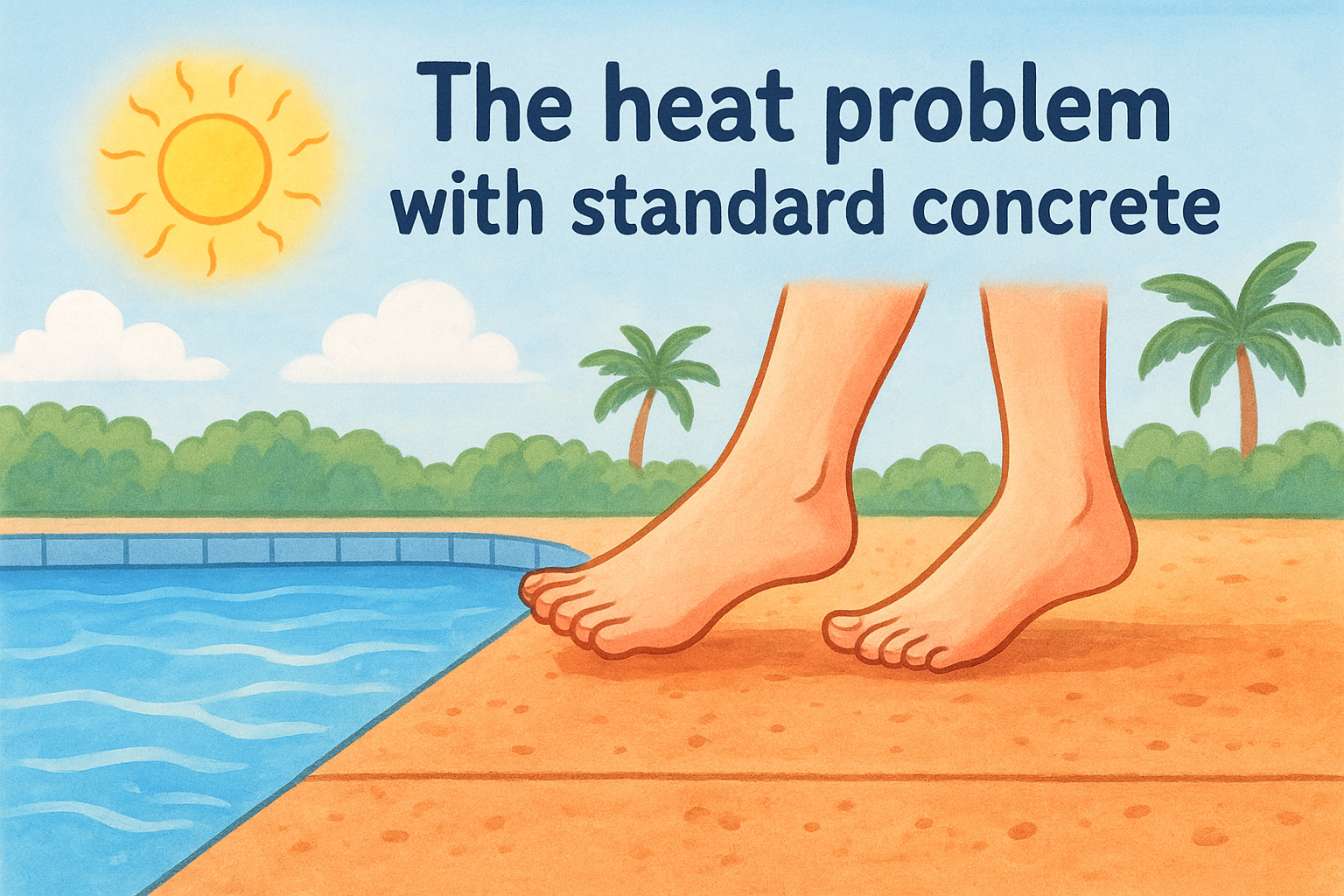
Surface temperatures on uncoated concrete can exceed 150°F during Florida summers, making an untreated pool deck a genuine safety risk for children and adults alike.
Your kids run barefoot from the pool to grab a towel. Your guests walk across the deck without a second thought. Every unshaded stretch of concrete between the pool edge and any covered area becomes a hazard. Understanding what is cool deck coating and how it addresses this is the first step toward fixing the problem.
Why Florida conditions accelerate the damage
UV exposure doesn’t just heat your deck. Over time, it breaks down uncoated concrete surfaces, leading to cracking, fading, and a rough texture that becomes harder to clean and more uncomfortable underfoot. In Southwest Florida specifically, heavy rainfall and humidity compound this by working their way into surface cracks and expanding them from below.
Your pool deck takes on more environmental stress here than it would in most other climates. A cool deck coating acts as a protective barrier on top of the concrete, slowing UV degradation while reducing surface heat at the same time.
How cool deck coating keeps concrete cooler
Cool deck coatings reduce surface temperature through two main mechanisms: solar reflectance and reduced thermal absorption. Standard gray concrete absorbs a large portion of incoming solar radiation and converts it directly to heat. A cool deck coating changes that equation by using lighter pigments and a textured surface that reflects more sunlight away before it can transfer into the concrete below.
The role of solar reflectance
The coating’s light-colored pigmentation reflects a higher percentage of solar energy rather than absorbing it. This performance is measured using a value called the solar reflectance index (SRI). The higher the SRI, the cooler the surface stays under direct sun. Properly formulated cool deck coatings can bring surface temperatures down by 30°F to 50°F compared to bare concrete under the same conditions.
A surface temperature reduction of 30°F to 50°F is the difference between a deck you cannot cross barefoot and one you can use comfortably all afternoon.
How texture helps with heat dissipation
The textured finish applied during installation does more than add grip. Air pockets created by the texture pattern reduce the direct contact area between your foot and the hot surface, making the deck feel cooler even at the same measured temperature. When you understand what is cool deck coating at this level, the design logic becomes clear: it works through both surface physics and reduced contact simultaneously.
What cool deck coatings are made of and common types
Understanding what is cool deck coating starts with its ingredients. Most formulas are primarily acrylic-based compounds mixed with aggregates, pigments, and binding agents. The acrylic base provides flexibility, which helps the coating handle thermal expansion and contraction without cracking under Florida’s temperature swings.
Acrylic spray texture coatings
Acrylic spray texture is the most common type you’ll find on residential pool decks. It gets applied in two thin coats over prepared concrete, creating the characteristic pebbled or knockdown texture that gives cool deck coatings their grip. These coatings bond directly to the concrete surface, and the white or light tan pigments are what drive the solar reflectance.
The light pigmentation is not cosmetic. It’s the primary reason acrylic coatings lower surface temperatures compared to bare gray concrete.
Kool Deck and similar proprietary mixes
Kool Deck, made by Mortex, is the original brand name that many people use as a generic term for this coating type. It uses Portland cement and aggregate mixed into a spray-applied formula, giving it a slightly more rigid finish than standard acrylic products. Both types accomplish the same goal, and both come in several light-toned finish colors:
- White
- Light tan (sandstone)
- Adobe
- Beige
Your surface condition and preferred finish will determine which product your contractor recommends before starting the job.
When cool deck coating is the right choice
Cool deck coating works well in specific situations, but it isn’t the right fit for every project. Understanding what is cool deck coating can help you decide quickly, but the real question is whether your deck’s current condition and your goals align with what this product does best.
Signs your current deck needs a coating
If your existing concrete is structurally sound but uncomfortable to walk on or showing surface wear from UV exposure, a cool deck coating is a strong option. You get improved heat performance, a cleaner look, and added slip resistance without the cost of a full replacement.
A cool deck coating can extend the useful life of a structurally intact pool deck by 10 to 15 years when applied and maintained correctly.
When other options make more sense
Deep structural cracks, significant spalling, or shifting slabs fall outside what a surface coating can fix. Repairs to the underlying concrete need to happen first, and in more severe cases, a full replacement is the right call before any coating gets applied. Applying a coating over a compromised base leads to premature peeling and adhesion failure regardless of product quality. Have a contractor inspect your deck before committing to a coating if you have any visible damage.
How installation and maintenance typically work
Knowing what is cool deck coating is only part of the picture. Understanding how it gets installed and what upkeep it needs helps you plan realistically for the project and the years after it.
What the installation process looks like
Surface preparation is the most critical step. Your contractor will clean the existing concrete, repair any minor cracks or chips, and apply a bonding agent before the coating goes down. The coating itself gets spray-applied in two thin layers, with time allowed between coats for proper adhesion. The full process typically takes one to two days, followed by a curing period before foot traffic resumes.
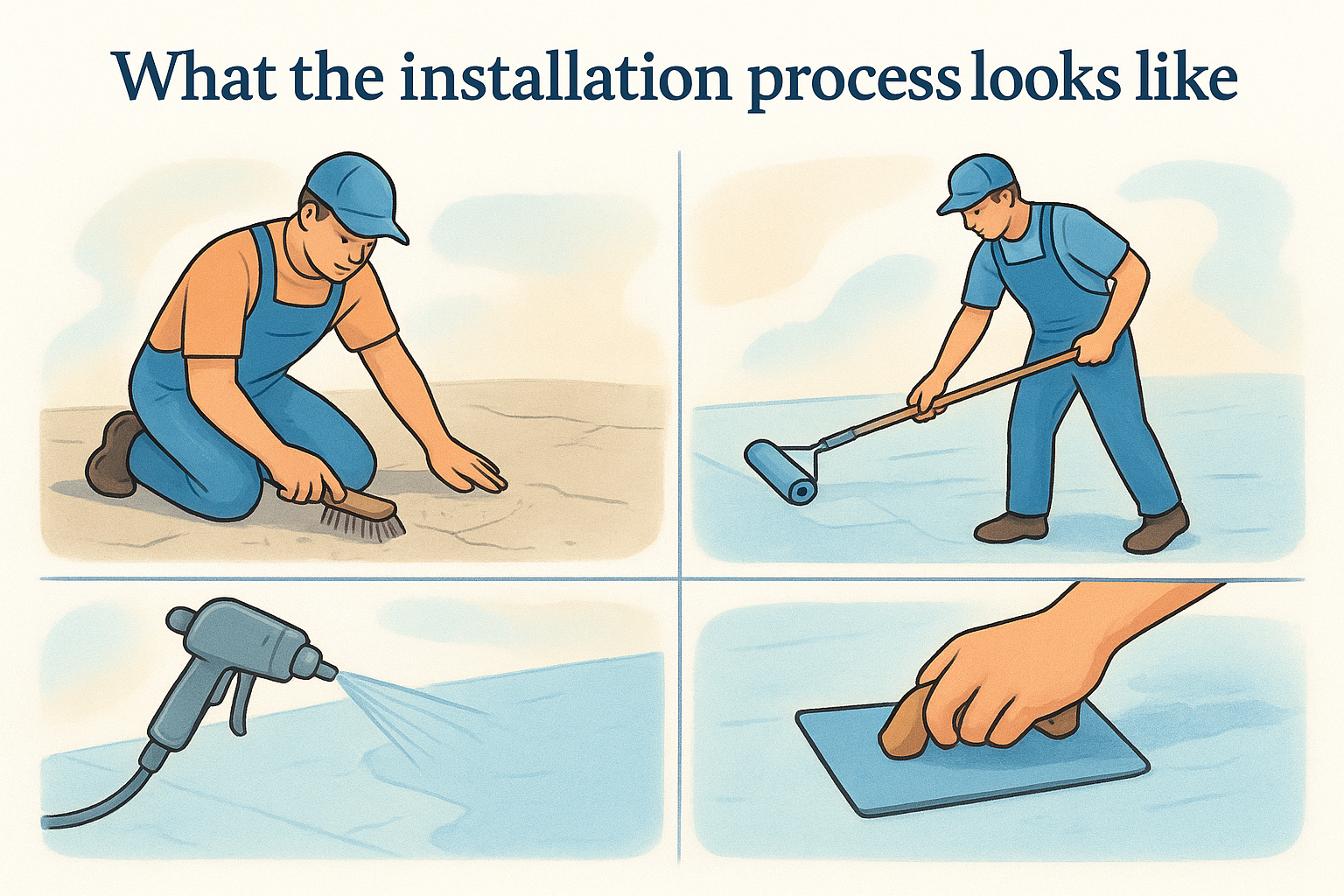
Skipping or rushing surface prep is the single most common reason cool deck coatings fail prematurely, regardless of product quality.
Keeping the coating in good shape
Routine maintenance is straightforward. You clean the surface with a mild detergent and a soft brush or low-pressure rinse once or twice a year to clear dirt, algae, and chemical buildup from pool water. Resealing every three to five years helps maintain the coating’s color, water resistance, and surface texture in Florida’s UV-heavy environment. If small areas begin to chip or peel, patching them early prevents moisture from getting underneath and causing wider adhesion failure.
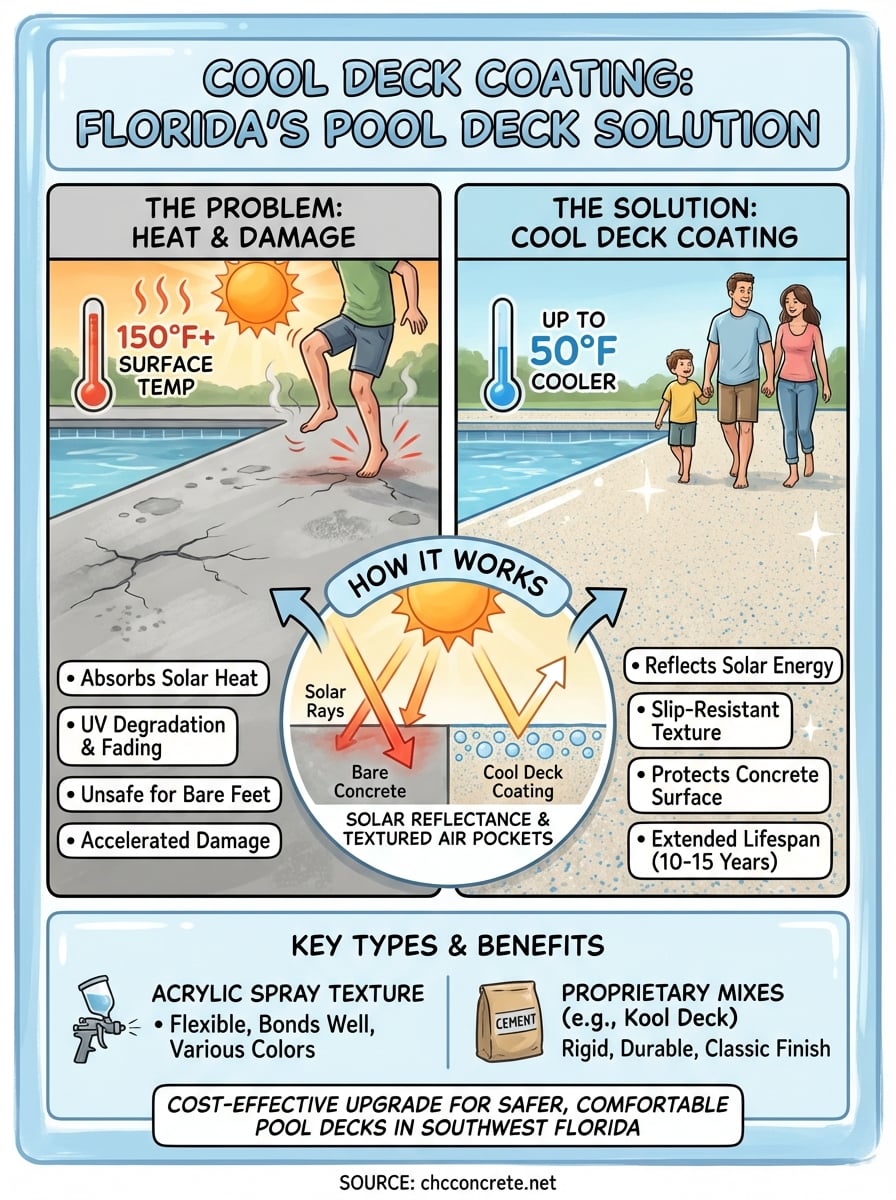
A cooler, safer pool deck
Now you know what is cool deck coating and how it works: it reflects solar energy, reduces surface temperatures by up to 50°F, and adds grip to a surface that would otherwise be uncomfortable and unsafe underfoot. For Southwest Florida homeowners, that combination solves a practical problem that standard concrete simply cannot handle on its own.
The right coating applied over properly prepared concrete gives you a deck you can actually use throughout the day, not just in the early morning before the sun reaches full strength. Regular cleaning and timely resealing keep the surface performing for years without major intervention. If your pool deck is currently burning your feet or showing visible surface wear, a cool deck coating is a cost-effective fix worth acting on. Contact CHC Concrete for a free estimate on pool deck coating or resurfacing in Fort Myers, Cape Coral, Estero, or Bonita Springs.