


A stamped concrete pool deck looks great in photos, textured patterns, natural stone aesthetics, and a clean finish that ties the whole backyard together. But before you commit to it, you need to understand the full picture. Knowing the stamped concrete pool deck pros and cons upfront saves you from expensive surprises down the road, especially here in Southwest Florida where heat, humidity, and heavy rain put every outdoor surface to the test.
At CHC Concrete, we’ve installed and repaired enough pool decks across Fort Myers, Cape Coral, Estero, and Bonita Springs to know exactly where stamped concrete performs well, and where it falls short. We’ve seen homeowners love their stamped decks for years, and we’ve seen others deal with issues that could have been avoided with better information from the start. Our goal here is to give you that information, straight from hands-on experience, not a sales pitch.
This article breaks down 7 key factors, from cost and durability to slip resistance and long-term maintenance, so you can decide whether stamped concrete is the right choice for your pool deck or if an alternative like pavers or brushed concrete makes more sense for your property and budget.
1. Choose a Southwest Florida pool deck contractor
The contractor you hire shapes the outcome more than any material decision you make. Stamped concrete pool deck pros and cons can shift dramatically based on how well the work is executed, and in Southwest Florida, execution requires knowledge that only comes from working in this specific region.
Why this factor matters in Fort Myers and Cape Coral
Fort Myers and Cape Coral sit on sandy, shifting soil that behaves differently under a concrete slab than the compacted ground found in cooler, drier regions. A contractor without local experience tends to under-prepare the base or skip key reinforcement steps, and you end up with cracks within a few years. Florida’s building codes also include specific pool deck requirements, and a team unfamiliar with local permitting can cause failed inspections or costly re-work.
The base preparation beneath your pool deck matters more than the decorative finish on top.
Pros you get with a contractor who knows local conditions
A qualified local contractor understands how to slope the deck properly so water drains away from the pool edge during heavy rainstorms instead of pooling. They also know which sealers and color hardeners hold up under intense UV exposure, so the surface stays protected through years of direct Southwest Florida sun rather than fading or peeling after one or two seasons.
Cons and risks when the install team cuts corners
When a contractor skips proper base compaction or wire mesh reinforcement, soil movement causes cracking faster than it should. Improper sealer application creates a slick, glossy surface that becomes dangerous when wet, which is a serious problem for any space next to a pool. Low-bid crews often cut these steps to save on labor, and you end up paying far more in repairs than you saved on the original contract.
Questions to ask before you sign a pool deck contract
Before you commit to any contractor, get clear answers on the following:
- Licensing and insurance: Ask for their Florida state contractor’s license number and verify it.
- Base preparation method: Confirm how deep they compact and what reinforcement they use.
- Sealer product and application: Find out if it provides UV protection and slip resistance.
- Local references: Request contacts from pool deck jobs completed in Fort Myers or Cape Coral specifically.
2. Look and customization options
Stamped concrete gives you a wide range of visual options that can match or complement almost any backyard design. Understanding exactly what you can achieve, and where the limits are, helps you make a confident decision when weighing stamped concrete pool deck pros and cons for your specific property.
What stamped concrete can realistically mimic
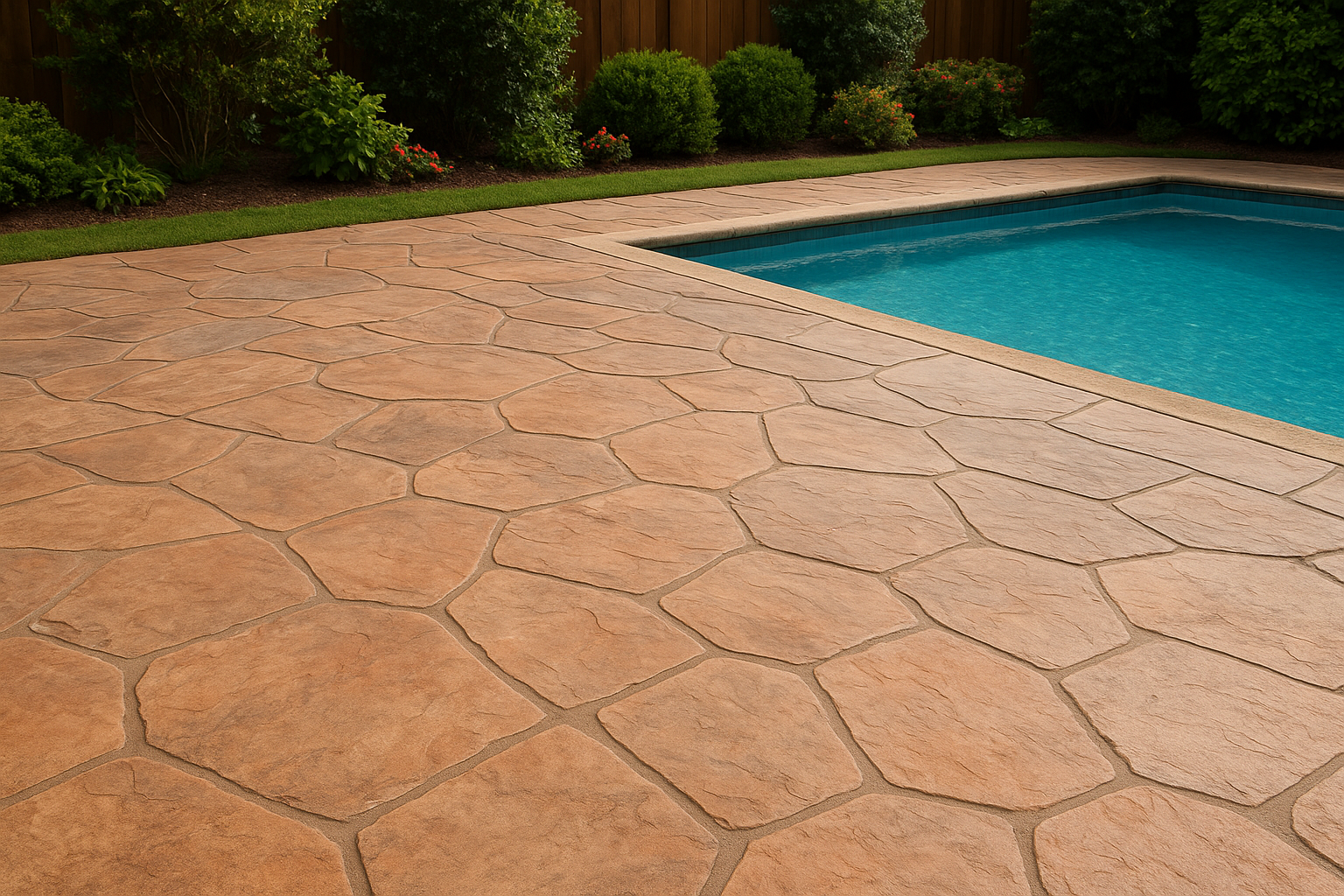
Contractors press textured molds into fresh concrete to replicate the look of natural stone, brick, slate, or tile. The result looks convincing from a distance, though it typically lacks the subtle variation real stone provides. Color hardeners and release agents expand your options further, letting contractors blend tones to match your home’s exterior or existing landscaping.
Pros for curb appeal and design flexibility
Your pool area gets a polished look without the higher cost of natural pavers or quarried stone. Contractors can create custom borders, multi-tone patterns, and inlaid designs that plain brushed concrete simply cannot match. This level of flexibility adds real curb appeal and improves your property’s overall visual value.
A well-executed stamped deck can make an average backyard look like a professionally designed outdoor living space.
Cons to watch for with colors, borders, and pattern choices
Colors can fade significantly under Southwest Florida’s intense UV exposure, especially with cheaper color hardeners or improper sealing. Intricate patterns with tight borders also make repairs harder to blend in, so any patched area becomes visible against the aged surrounding surface.
Design moves that make stamped concrete look higher-end
Choosing larger-format patterns like flagstone or ashlar slate looks more refined than small, repetitive brick stamps. Adding a contrasting border color around the perimeter frames the deck cleanly and elevates the overall design without adding significant cost.
3. Upfront cost and long-term value
Cost is one of the most important factors when reviewing stamped concrete pool deck pros and cons. Understanding where your money goes, both upfront and over time, helps you make a decision that fits your budget and your property goals.
Typical price drivers for stamped concrete pool decks
Stamped concrete typically runs $12 to $20 per square foot installed, depending on pattern complexity, color hardener quality, and sealer type. Your deck size, site prep requirements, and how much base work the crew needs to do all push that number up or down.
Pros for budget and resale compared to pavers and stone
Stamped concrete costs significantly less than natural stone or individual pavers, which can run $20 to $35 per square foot or more once you factor in setting materials and labor. You still get a high-end visual result at a lower starting price, which improves your return when it comes time to sell.
A stamped deck that holds its finish for 10 to 15 years with basic maintenance delivers strong value compared to surfaces that require replacement within a decade.
Cons that raise total cost over time
Resealing every two to three years adds a recurring cost most homeowners do not budget for initially. Color repairs or crack patching on a stamped surface also cost more than plain concrete because matching the existing pattern and tone requires skilled labor and specialty materials.
How to compare estimates apples-to-apples
When reviewing bids, confirm that each contractor includes base preparation, reinforcement, color hardener, and sealer in their price. Contractors who omit those line items are not giving you a true comparison, and the lower number often reflects work that simply does not get done.
4. Slip resistance and safety around water
Safety is a non-negotiable factor when you’re evaluating stamped concrete pool deck pros and cons. The surface people walk on barefoot, wet, and in a hurry needs to perform reliably under every condition your yard sees.
Why stamped concrete can get slick near pools
Standard stamped concrete uses smooth mold patterns that create a polished surface with minimal texture. Water on that surface reduces friction quickly, especially when a glossy topcoat sealer is applied for visual appeal. That combination makes falls more likely in a space where children and adults move fast and surfaces stay wet.
Pros when you spec the right texture and sealer
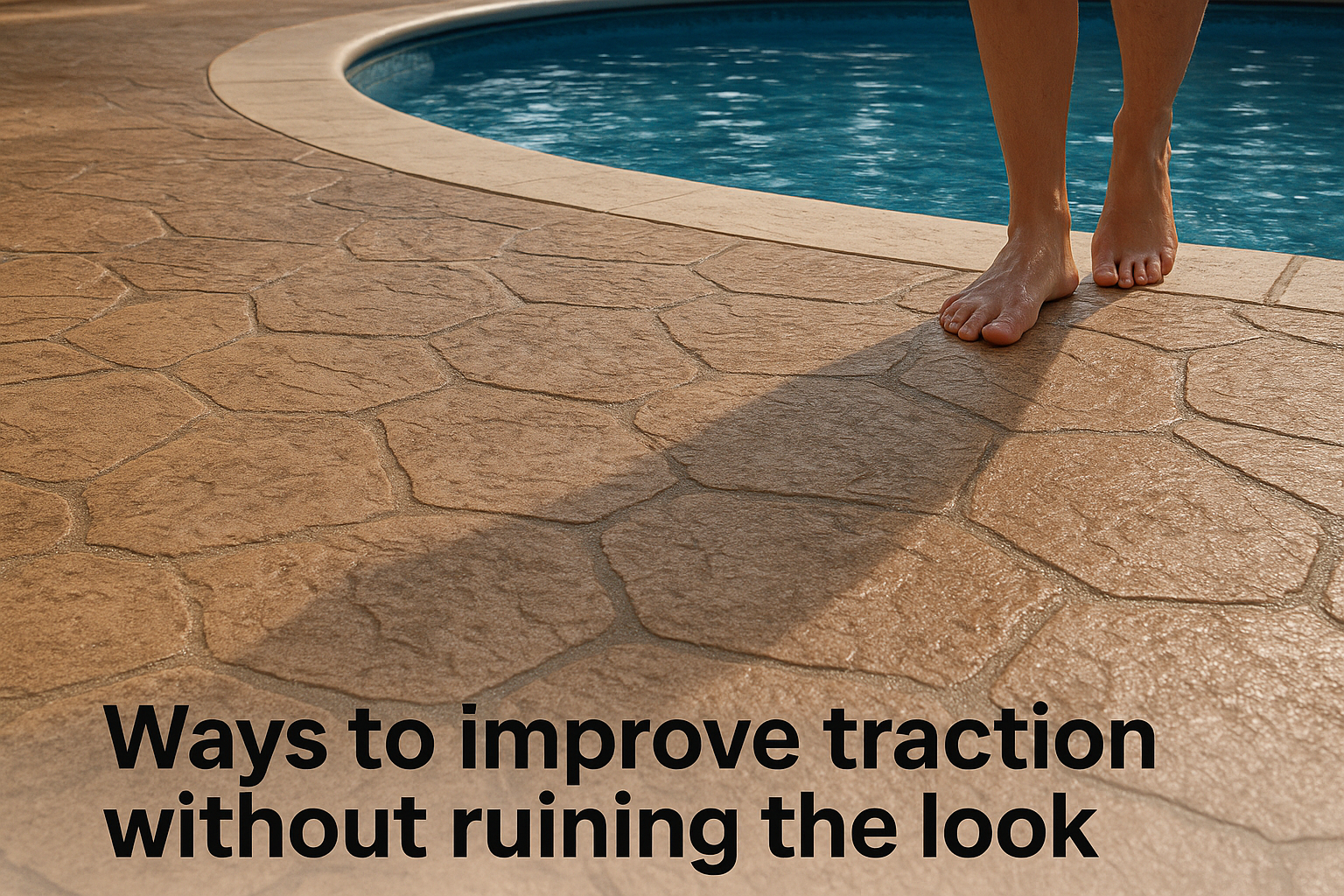
Choosing the right texture depth and sealer formulation changes the safety profile entirely. Anti-slip additives mixed into the sealer or broadcast onto the surface before the final coat create meaningful traction. A broom-finished or rock-salt texture between stamps adds grip without altering the overall visual result.
Specifying a matte, anti-slip sealer at the time of installation costs far less than resealing a slick deck after the fact.
Cons for kids, pets, and older guests
A glossy sealed surface without anti-slip treatment becomes genuinely hazardous when wet. Older guests and younger children are most at risk because they cannot adjust balance as quickly on reduced-friction surfaces, and hard concrete gives no forgiveness on impact.
Ways to improve traction without ruining the look
Your contractor can broadcast aluminum oxide or silica sand into the final sealer coat to increase grip while maintaining the stamped pattern’s appearance. Requesting a matte or satin finish instead of high-gloss also reduces slipperiness without sacrificing the visual quality you paid for.
5. Heat, sun, and barefoot comfort
Heat is a practical concern that often gets overlooked when people compare stamped concrete pool deck pros and cons. In Southwest Florida, surface temperatures can climb well above air temperature during summer months, making barefoot comfort a real factor in how much you actually use your pool area.
Why pool decks feel hotter in Southwest Florida
Dark or dense surfaces absorb solar radiation throughout the day and radiate it back as heat. Southwest Florida sees intense sun from March through October, and concrete that bakes for 8 to 10 hours straight can reach temperatures that make walking barefoot genuinely painful without sandals.
Pros of color choice and surface texture for cooler feet
Lighter color hardeners reflect more sunlight and stay meaningfully cooler than dark tones under the same conditions. A textured surface also reduces the contact area between your foot and the slab, which lowers heat transfer compared to a flat, smooth finish. Choosing the right combination at installation makes a noticeable difference on a 95-degree day.
Selecting a light tan or cream color hardener can reduce surface temperature by 15 degrees or more compared to charcoal or dark gray options.
Cons that show up in peak summer sun
Even light-colored stamped concrete absorbs heat faster than materials like wood composite or travertine, which have natural insulating properties. During peak summer hours, any concrete surface can become uncomfortable without shade structures or periodic water cooling from the pool itself.
Practical ways to reduce surface temperature
Shade structures like pergolas or retractable awnings over part of the deck give you a cooler zone to step onto before moving toward the pool edge. You can also ask your contractor about light-reflective sealers formulated to reduce heat absorption without altering the stamped pattern’s appearance.
6. Cracking, fading, and maintenance needs
Long-term durability is a critical piece of the stamped concrete pool deck pros and cons puzzle. Understanding what the surface looks like after five or ten years of Southwest Florida weather helps you plan realistically and avoid surprises that hit your wallet hard.
How stamped concrete holds up over time
Stamped concrete performs well when proper reinforcement and curing practices are followed during installation. On stable, well-compacted soil with adequate wire mesh or rebar, a stamped deck can last 20 years or more before needing major repair or replacement.
Pros for durability versus wood and some overlays
Compared to wood decking or spray-on overlays, stamped concrete resists rot, insect damage, and surface delamination. It does not warp or splinter under repeated wet-dry cycles, which makes it a more structurally stable option for pool environments that stay wet for long stretches during Florida’s rainy season.
Stamped concrete outlasts wood decking and most spray-on overlays when installed correctly on a properly prepared base.
Cons like cracking, discoloration, and sealer wear
Concrete cracks over time, and stamped surfaces make those cracks harder to repair invisibly because matching the existing pattern and color requires skilled labor and specialty materials. Color fading also accelerates with poor sealer choices or when resealing gets skipped, leaving the deck looking patchy and worn years before it should.
What maintenance actually looks like year to year
Expect to reseal the surface every two to three years to maintain both appearance and protection. Annual cleaning with a pressure washer and mild detergent removes mold, algae, and mineral deposits that build up quickly in Florida’s humid climate.
Quick next steps
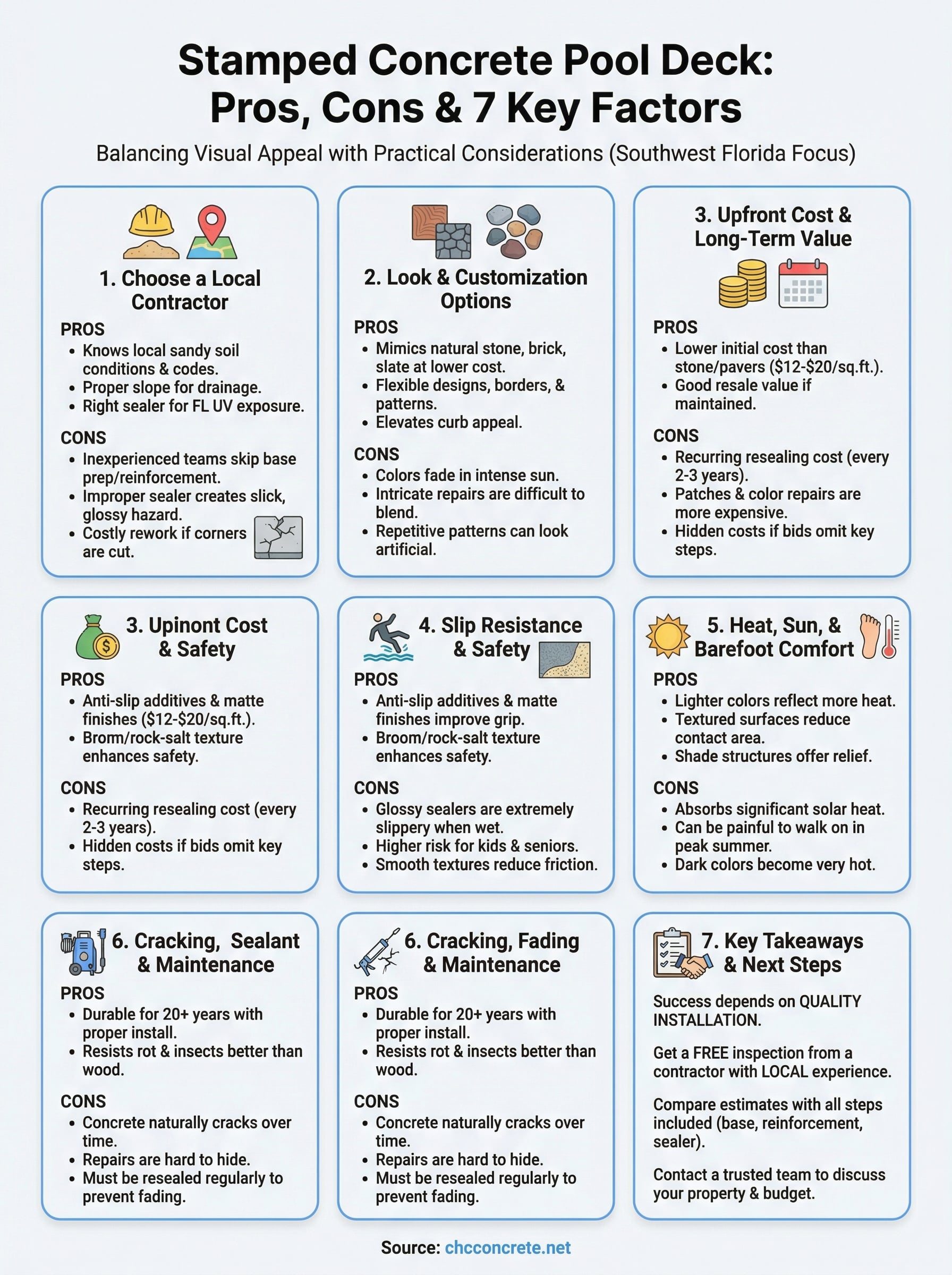
Weighing the stamped concrete pool deck pros and cons comes down to one clear conclusion: the material works well when the installation is done right, and it causes real problems when corners get cut. You now know what drives cost, what creates safety risks, what makes surfaces crack or fade early, and what questions separate a qualified contractor from one who will leave you with a deck that fails ahead of schedule.
Your next move is straightforward. Get a project inspection and a free estimate from a contractor who has direct experience with Southwest Florida soil conditions, local permitting, and pool deck-specific installation standards. That conversation will tell you quickly whether stamped concrete fits your property, your budget, and your timeline, or whether a different surface makes more sense. If you are ready to take that step, contact the team at CHC Concrete to schedule your on-site visit.