


Searching for a stained concrete contractor near me pulls up dozens of results, but not every contractor behind those listings has the skill or experience to deliver a finish that actually lasts. Stained concrete is part chemistry, part craftsmanship, and the difference between a contractor who understands that and one who doesn’t will show up in your floors, your patio, or your pool deck within the first year.
Here at CHC Concrete, we’ve worked across Fort Myers, Cape Coral, Estero, and Bonita Springs long enough to see what happens when homeowners hire the wrong crew. Peeling sealers, blotchy color, uneven application, most of the stained concrete repair calls we get trace back to a poor contractor choice. Southwest Florida’s UV exposure and humidity make proper technique even more critical, and not every company accounts for that.
So before you request quotes or sign a contract, it pays to know what separates a qualified staining contractor from one who’s just winging it. Below, we break down five practical ways to evaluate your options and make a hiring decision you won’t regret.
1. Verify license and insurance with CHC Concrete
Any stained concrete contractor near me search should start with one non-negotiable step: confirming the contractor holds a valid Florida license and carries both general liability and workers’ compensation insurance. This protects you if something goes wrong on your property, and in Florida, it also tells you the contractor met the state’s training and testing requirements before picking up a trowel.
What to verify fast in Southwest Florida
Florida’s Department of Business and Professional Regulation lets you search any contractor license online in under a minute. Check that the license is active, not expired or under discipline. In Southwest Florida, contractors must also comply with county-level requirements in Lee and Collier counties, so confirm the license actually covers your specific project type and location before you go any further.
Questions to ask before you schedule an estimate
Before you book a site visit, ask these questions directly and expect fast, clear answers:
- "Can you provide your license number and current insurance certificates?" Any legitimate contractor sends these without hesitation.
- "Is your workers’ comp current, and does it cover every crew member on site?"
- "Are you registered to pull permits in Lee or Collier County for this scope of work?"
Red flags that signal a risky contractor
If a contractor hesitates, deflects, or offers verbal assurances instead of actual documents, that tells you everything you need to know.
Unlicensed contractors carry no financial accountability, which means any damage they cause becomes your problem to fix. Watch for cash-only payment requests, missing company addresses on written estimates, and contractors who cannot name their insurance carrier on the spot. These patterns consistently show up in complaints filed after the work is done, not before.
Cost factors that change your quote
Licensed and insured contractors cost more than unlicensed ones upfront, and that gap is legitimate. Insurance premiums, state license fees, and county compliance requirements add real overhead. However, a contractor who skips those costs will also skip proper surface prep, quality materials, and correct curing time. Factor the cost of redoing the entire job into any quote that looks suspiciously low compared to others.
2. Confirm real concrete staining expertise
License and insurance get you in the door, but they don’t guarantee the contractor actually knows how to stain concrete well. When you search for a stained concrete contractor near me, you’re looking for someone who understands stain chemistry, surface porosity, and the specific challenges that Florida heat and humidity create for any decorative finish.
What "concrete staining" should include on your project
True concrete staining is not paint. A qualified contractor should work with either acid-based stains, which chemically react with the concrete’s minerals to create permanent color, or water-based stains, which penetrate the surface and allow for more controlled tones. Ask to see photos from completed projects on both interior and exterior Florida surfaces before you agree to anything.
Questions to ask about stain systems and workmanship
Before you schedule a site visit, get specific answers from the contractor:
- "Do you use acid stains, water-based stains, or both, and which fits my surface?"
- "How do you handle color consistency across repaired or patched sections?"
- "Can you show me past project photos from homes in this area?"
Red flags that lead to blotchy color or early failure
Contractors who cannot explain the difference between acid and water-based staining systems have likely not done enough of this work to deliver consistent results.
Watch for anyone who skips a test patch or who promises perfectly uniform color across old concrete. Both signals indicate they don’t understand how staining actually interacts with an existing surface.
Cost factors that reflect experience and complexity
Experienced staining contractors charge more because they account for multiple coats, proper dwell time, and neutralization after acid staining. Projects with repairs, multiple colors, or detailed patterns cost more than single-tone applications, and any quote that doesn’t reflect that added complexity deserves a direct follow-up question.
3. Demand strong surface prep and repair planning
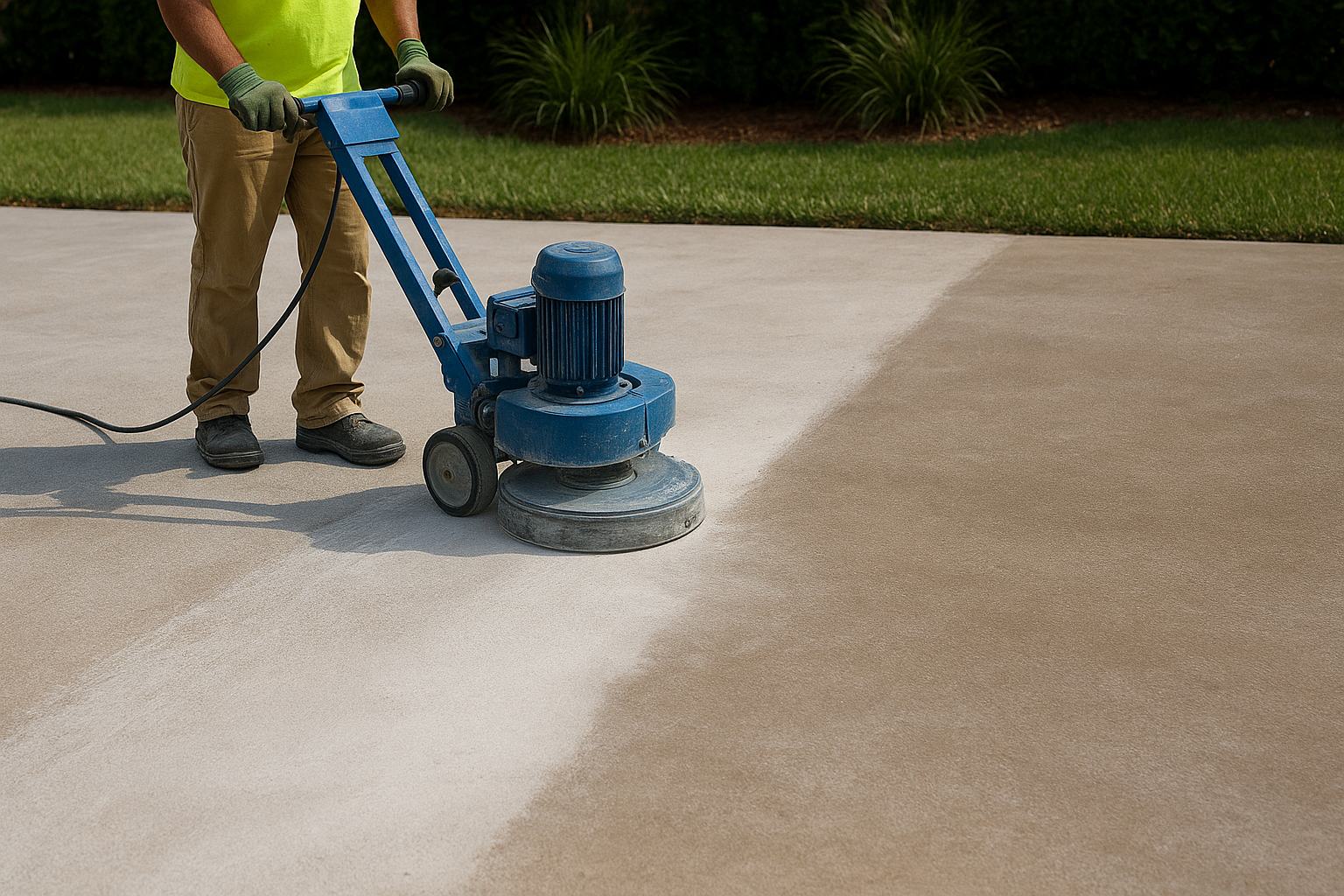
Surface prep separates a stain job that lasts from one that peels in eighteen months. Any stained concrete contractor near me search should prioritize companies who treat prep as non-negotiable, because Florida’s humidity and heat make a poorly prepared surface fail faster than almost anywhere else in the country.
What proper prep looks like on Florida concrete
Proper prep starts with mechanical grinding or shot blasting to open the concrete’s pores so the stain can actually penetrate. Your contractor should also assess for efflorescence, existing coatings, and moisture vapor before anything touches the surface, because each one changes how the stain behaves.
Questions to ask about cracks, patches, and moisture
Ask your contractor these direct questions and expect clear specific answers about their prep process and materials:
- "How do you test for moisture before applying stain?"
- "What filler do you use for cracks and spalled sections?"
- "Will patched areas accept stain the same way as the original concrete?"
Red flags that cause peeling, flaking, and hot spots
Blistering and peeling almost always trace back to trapped moisture or an inadequately cleaned surface. Watch for any contractor who jumps straight to staining without grinding, etching, or testing the substrate first.
A contractor who skips moisture testing on Florida concrete is setting your project up to fail before the stain ever touches the floor.
Cost factors tied to prep, grinding, and repairs
Grinding, crack repair, and moisture mitigation add to your total cost, but they protect the finish long-term. Any quote that does not break out prep as a separate line item deserves a direct follow-up, because missing that detail usually means skipping the work entirely.
4. Choose the right stain and sealer for your space
Even a skilled stained concrete contractor near me can deliver a finish that fails fast if the wrong stain or sealer ends up on your surface. Stain type and sealer selection depend on where the concrete sits, how much foot traffic it handles, and what Florida’s sun and rain will throw at it daily.
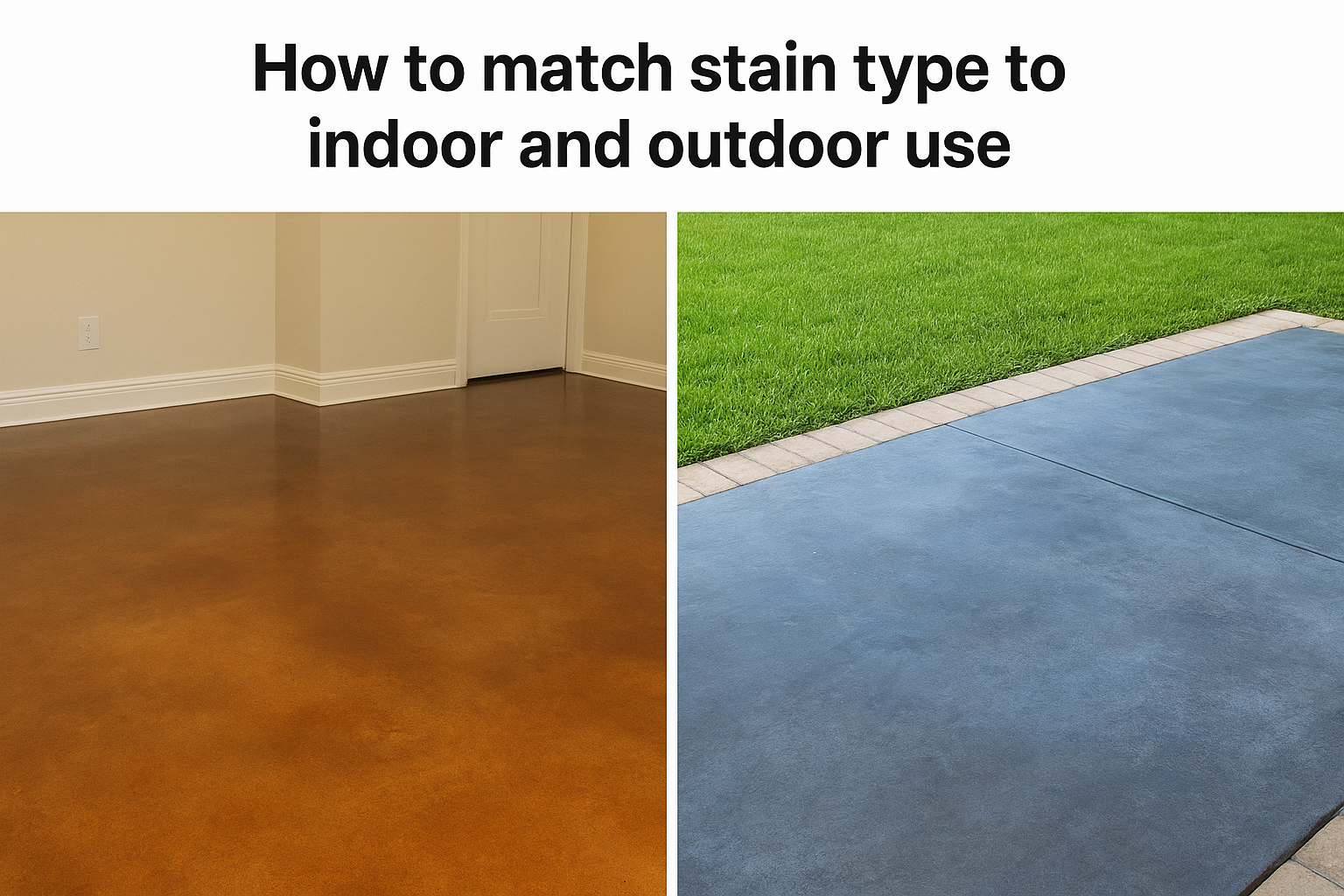
How to match stain type to indoor and outdoor use
Acid stains work well on interior floors where you want permanent, reactive color with natural variation. For outdoor surfaces like driveways, patios, and pool decks, water-based stains give you better UV stability and more control over the final tone without the reactive unpredictability acid stains can create under direct sun.
Questions to ask about UV, slip resistance, and sealer
Ask your contractor these questions before any product gets applied:
- "What sealer do you recommend for UV exposure at this location?"
- "Does the sealer include a traction additive, or is that applied separately?"
- "How many coats does this surface need, and how long between coats?"
Red flags that create slick surfaces or fast fading
A sealer that looks great on day one but turns slick when wet is a liability on any Florida pool deck or walkway.
Glossy sealers without traction additives are a common shortcut on outdoor concrete. Watch for contractors who apply a single coat without letting it cure fully before moving on.
Cost factors for sealers, traction additives, and coats
Premium UV-resistant sealers cost more than standard products, and the difference shows up in how long the finish holds its color. Multiple coats and anti-slip additives add to your total, but cutting those line items creates a surface you’ll be resealing or repairing within two years.
5. Compare bids on scope, timeline, and terms
Once you’ve narrowed your list of candidates, comparing quotes carefully tells you which stained concrete contractor near me is actually delivering the work you need and which one is just offering the lowest number. Price alone gives you no useful information without knowing what sits behind it.
What a clear written estimate should spell out
A solid written estimate covers square footage, stain type, number of coats, sealer product, and prep work as separate line items. It should also include a project start date and estimated completion window so you know exactly what you’re agreeing to before you sign.
Questions to ask about schedule, access, and cleanup
Ask each contractor these questions before comparing their numbers:
- "How many days will the surface be off-limits after staining and sealing?"
- "Who handles debris and material disposal when the job wraps up?"
- "What happens to my timeline if weather delays the project?"
Red flags in pricing, deposits, and vague scope
Watch for large upfront deposits exceeding 30 percent of the total and scope language like "concrete work as needed." Both patterns leave you with no legal footing if the finished product misses the mark.
Any estimate that lists only a single total with no breakdown gives you no way to verify what you’re actually paying for.
Cost factors you should see line-by-line
A detailed quote should break out labor, materials, prep, and sealer as individual line items. Any contractor who resists that level of transparency is likely hiding margin somewhere in the total.
Wrap Up
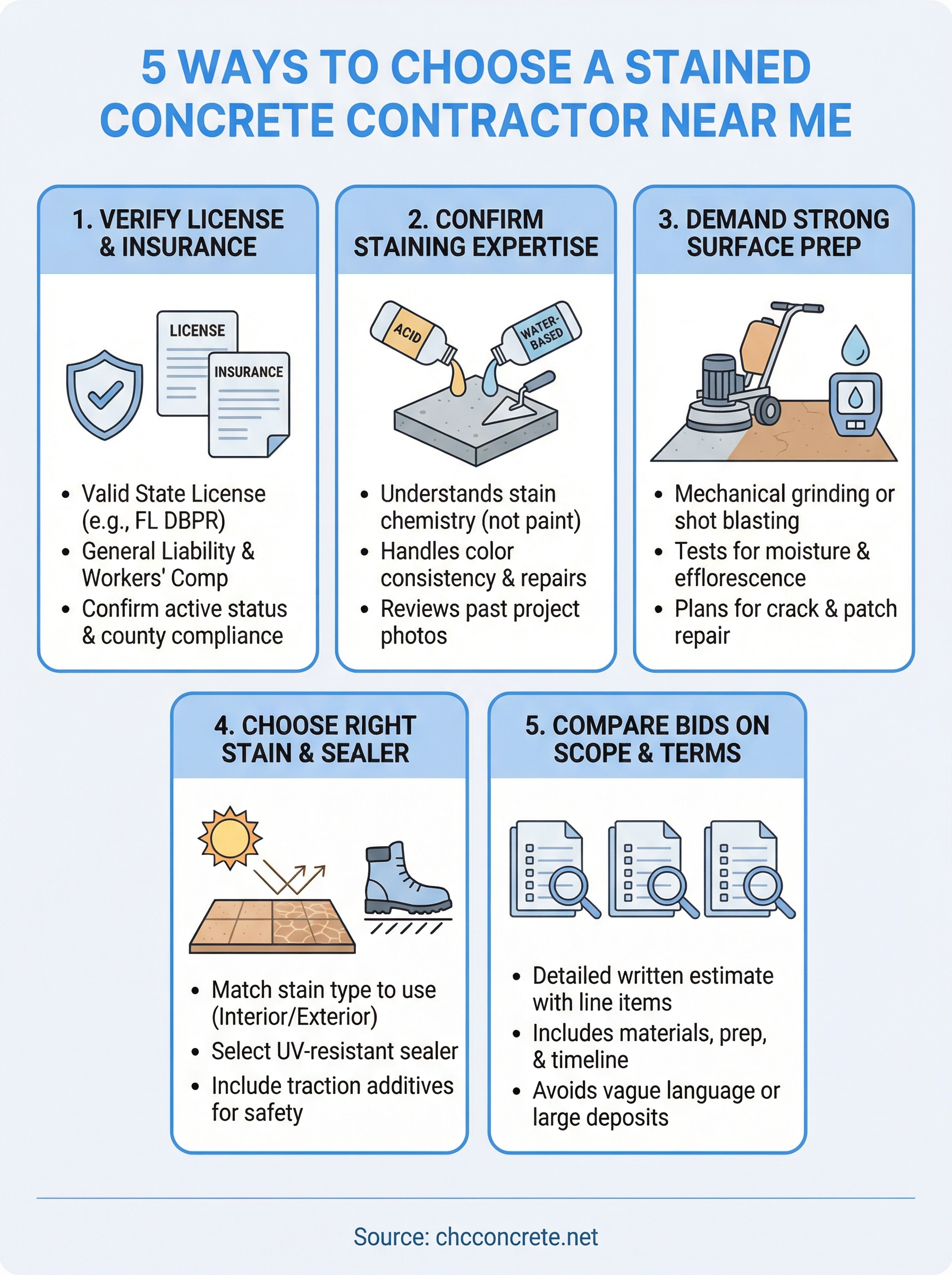
Choosing the right stained concrete contractor near me comes down to five things: confirmed licensing and insurance, real staining expertise, thorough surface prep, the right stain and sealer for your specific environment, and a written bid that breaks out every line item. Skip any one of these, and you’re gambling with a finish that Southwest Florida’s heat, humidity, and UV exposure will expose quickly.
Every red flag covered in this guide points back to the same pattern: contractors who rush the process and cut corners on materials and prep. Your concrete surfaces take a beating year-round in this climate, and they need a crew that accounts for that before the first coat ever goes down.
If you’re ready to talk through your project with a team that works throughout Fort Myers, Cape Coral, Estero, and Bonita Springs, contact CHC Concrete for a free estimate and get a clear scope before you commit to anything.