

Your patio takes a beating in Southwest Florida. Between relentless UV exposure, months of tropical downpours, and the constant humidity, even well-poured concrete starts showing its age, fading, cracking, or just looking worn out. The good news? Tearing it out and starting over is rarely your only move. There are several concrete patio resurfacing options that can restore both the function and the look of your outdoor space at a fraction of the cost.
But not every resurfacing method works the same way here as it does up north. Florida’s heat, moisture levels, and sandy soil conditions all affect how materials bond, cure, and hold up over time. Choosing the wrong product means you’re back to square one in a couple of years. That’s why it matters to understand what each option actually involves, and where it performs best.
At CHC Concrete, we resurface patios across Fort Myers, Cape Coral, Estero, and Bonita Springs, and we see firsthand what lasts and what doesn’t in this climate. Below, we break down six proven resurfacing methods, from stamped overlays to decorative staining, so you can figure out which one fits your patio, your budget, and your style.
1. Polymer-modified concrete overlay with CHC Concrete
A polymer-modified concrete overlay is one of the most versatile and durable concrete patio resurfacing options available for existing slabs. It goes directly over your current concrete and gives you a fresh, customizable surface without the cost and disruption of a full tearout.
What you get and how it changes the patio
This material combines Portland cement with polymer additives to create a thin layer, typically between 1/4 inch and 3/8 inch thick, bonded to your existing slab. You get a completely new surface appearance, and the polymer component gives the overlay flexibility and adhesion strength that straight cement products simply can’t match.
How it holds up in Southwest Florida weather
Florida’s combination of intense UV radiation and sustained humidity puts overlays through a real stress test year-round. Polymer-modified products perform better here than standard cement-based overlays because the polymer allows the material to flex slightly with daily temperature swings, which reduces the chance of cracking over time.
In Southwest Florida, a rigid overlay that can’t flex with daily heat cycles will develop hairline cracks within a season or two.
Surface prep that makes or breaks the bond
Proper surface preparation is the single biggest factor in how long your overlay lasts. At CHC Concrete, we pressure wash, grind, and profile the existing slab before applying any material. Any contamination, oil staining, or weak concrete left in place will cause delamination within months, no matter how good the product is.
Texture, slip resistance, and heat considerations
You can broadcast silica sand into the wet overlay to add traction for rainy season conditions. Choosing a lighter color finish also reflects more heat, which makes a real difference when you’re walking barefoot across a south-facing patio on a July afternoon.
Best candidates and when to skip this option
Your patio is a strong candidate if the existing slab is structurally sound with only surface-level issues like minor cracking, staining, or worn finish. Skip this option if your slab has active settling, significant heaving, or cracks wider than 1/4 inch.
Typical cost range in Florida and what drives price
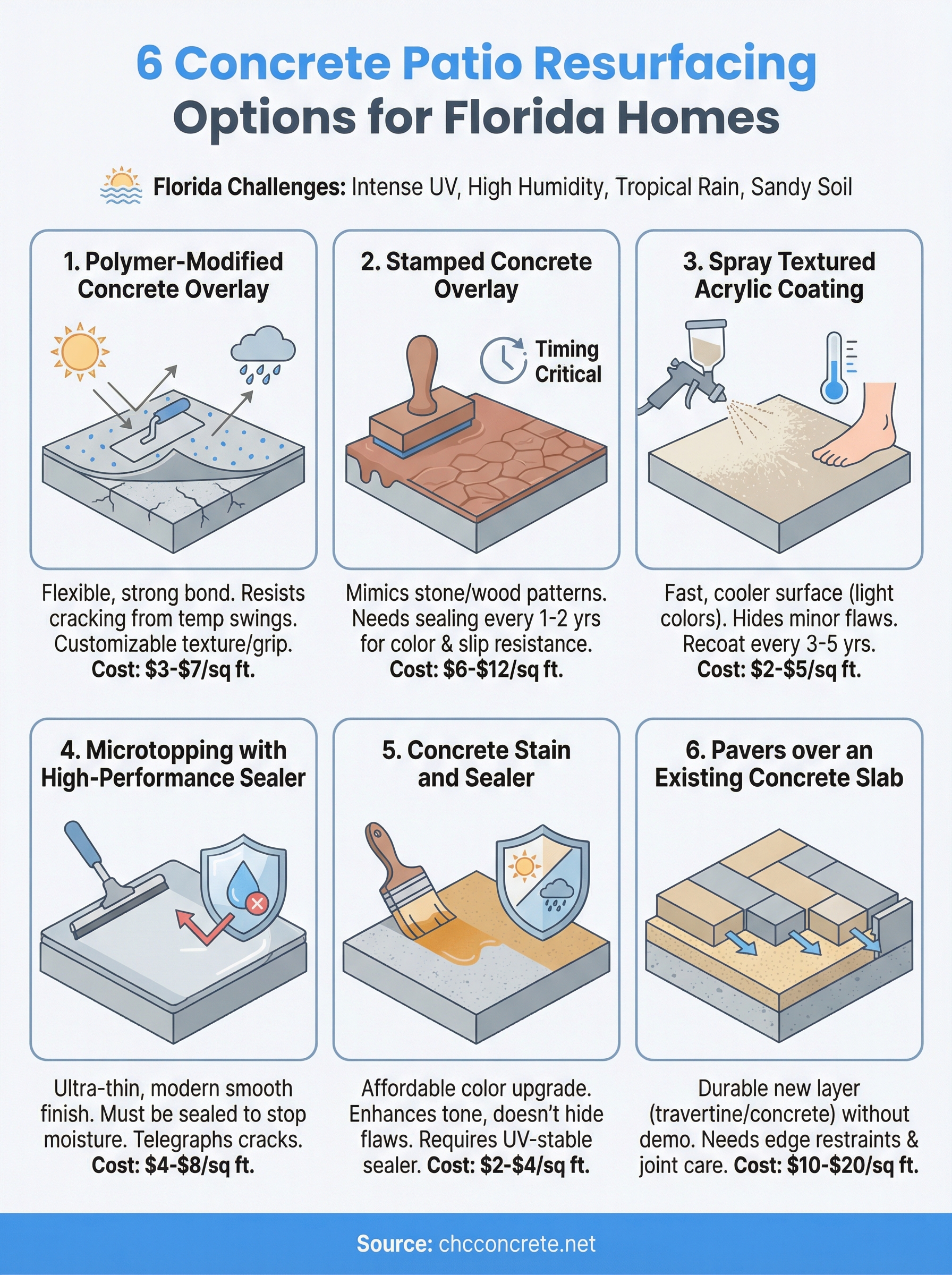
In Southwest Florida, polymer-modified overlays typically run $3 to $7 per square foot installed. Surface condition, total square footage, and your chosen finish texture all drive that number up or down.
Timeline and downtime for a working household
Most overlays reach foot traffic readiness within 24 to 48 hours of application. Full cure, meaning you can move furniture and heavier items back, generally takes about 7 days depending on ambient temperature and humidity levels at the time of the pour.
2. Stamped concrete overlay
A stamped concrete overlay gives your existing slab a completely new visual identity without demolition costs. Installers apply a polymer-modified overlay material and press textured stamps into the surface before it sets, creating patterns that mimic stone, brick, tile, or wood planks.
What it is and how installers create the pattern
The process starts with surface preparation and a bonding agent, followed by the overlay mix. Before the material hardens, installers press rigid rubber stamps into it to create the pattern. Timing is critical because pressing too early or too late produces a blurred, uneven impression.
Patterns that look right on Florida homes
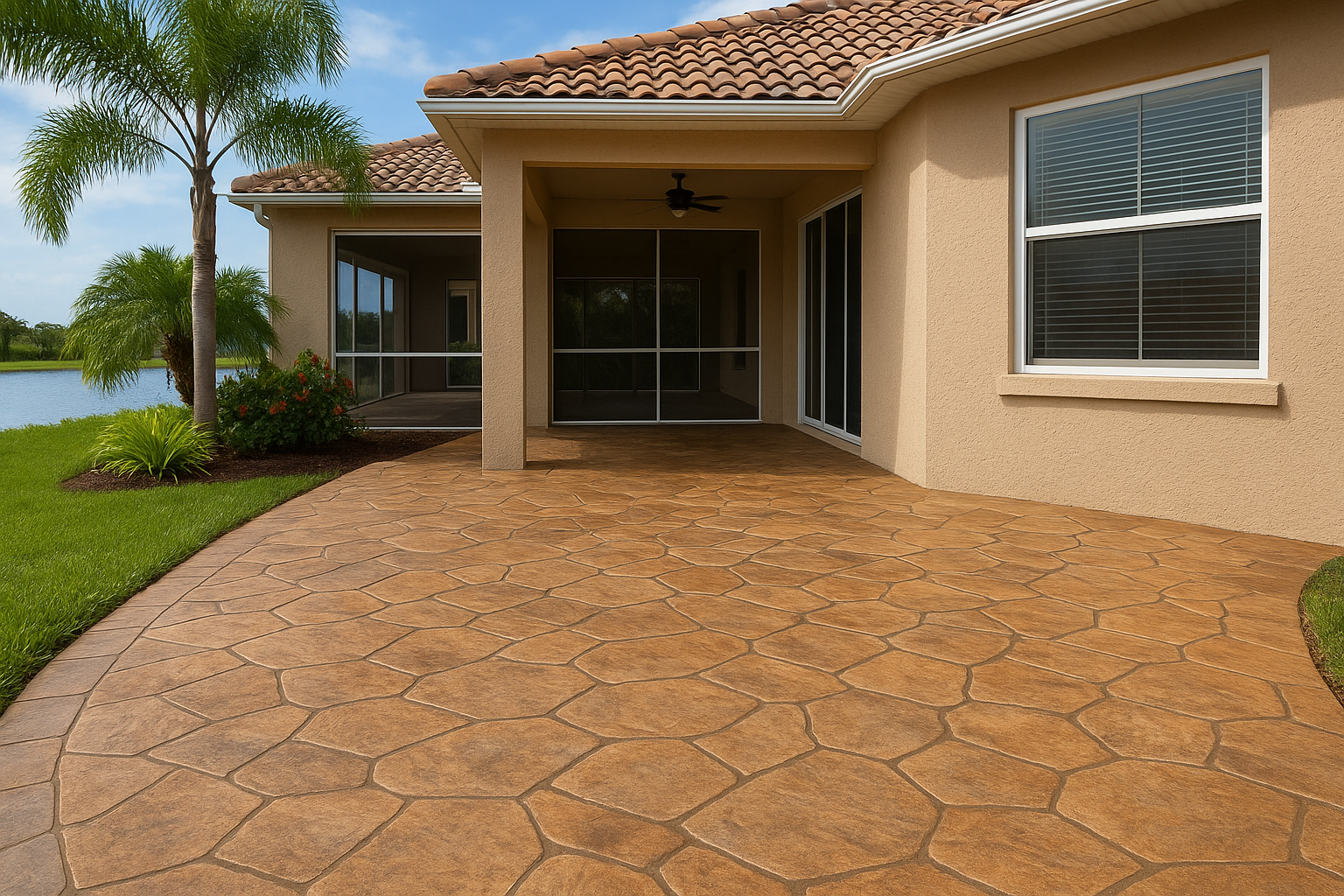
Ashlar slate, random stone, and large-format tile patterns complement the stucco exteriors and open lanai designs common in Cape Coral and Fort Myers. Wood plank patterns also work well for covered patio areas.
Color options that resist fading in harsh sun
Integral color and UV-stable color hardeners give stamped overlays their tone. Lighter earth tones and warm grays hold up better outdoors than deep, saturated colors, which fade faster under constant South Florida sun.
Applying a UV-resistant sealer every one to two years significantly extends color vibrancy on any stamped surface in Florida’s climate.
Traction and sealing choices for wet-season safety
Anti-slip additives mixed directly into the sealer are a practical necessity on stamped surfaces, which get slick when wet. A matte or satin finish also provides better grip than a high-gloss sealer.
Best candidates and common failure points
This is one of the more accessible concrete patio resurfacing options for patios with minor surface wear. It fails early on structurally compromised slabs or when resealing gets skipped entirely.
Typical cost range and maintenance expectations
Stamped overlays in Southwest Florida typically run $6 to $12 per square foot installed. Budget for resealing every one to two years to protect both the color and the surface integrity long-term.
3. Spray textured acrylic coating
Spray textured acrylic coatings give your existing slab a practical, textured refresh without tearing anything out. A contractor sprays the acrylic compound directly onto prepared concrete, building a thin bonded surface in a single visit.
What it is and why homeowners pick it
This system uses acrylic-based compounds applied through spray equipment to create a thin finish over your existing slab. Homeowners choose it for its fast turnaround, lower material cost, and ability to improve both appearance and grip in one step.
Cooler, safer footing in full sun and summer rain
Lighter acrylic colors reflect solar radiation and reduce surface heat, while the built-in texture adds grip during heavy summer rain. Your bare feet will notice the difference on a July afternoon compared to untreated concrete.
A light-toned acrylic coating on a south-facing patio typically runs significantly cooler than bare or dark concrete during peak Florida summer heat.
Texture styles that hide stains and minor flaws
Splatter and skip-trowel finishes mask minor staining, surface pitting, and hairline cracks. You can match texture coarseness to the zone:
- Coarser textures for high-traffic open patio areas
- Finer finishes for covered or enclosed lanai sections
Where it works best on patios and around lanais
This coating suits flat patios, covered lanais, and screen enclosures across Fort Myers and Cape Coral where improved traction and a refreshed appearance are the primary goals. It also works well on pool deck surrounds that stay shaded for part of the day.
Limitations with cracking, settling, and moisture
The thin profile means active cracks and slab movement telegraph through quickly. Moisture vapor pushing up from below can cause bubbling, and the coating cannot bridge structural gaps or conceal significant slab damage.
Typical cost range and recoating timeline
Expect $2 to $5 per square foot installed in Southwest Florida, with recoating every three to five years required in direct sun conditions to maintain appearance and surface integrity.
4. Microtopping with a high-performance sealer
Microtopping is one of the thinner concrete patio resurfacing options available, typically ranging from 1/16 inch to 1/8 inch thick. It bonds directly to your existing slab and delivers a clean, contemporary surface finish that suits modern Florida home aesthetics well.
What it is and the look it creates
Microtopping is a cement-based, polymer-modified compound applied in very thin coats, usually two to three layers. The result is a smooth, refined surface with subtle tonal variation that looks intentional rather than patched over.
Design range from modern smooth to light texture
You can finish a microtopping anywhere from ultra-smooth and flat to a light, hand-troweled texture. Grays, warm taupes, and soft whites work best outdoors in Florida because they stay visually clean under strong sunlight without pulling heat the way darker tones do.
Moisture and rain exposure considerations outdoors
Microtopping is porous without a sealer, so moisture penetration becomes a serious problem on uncovered patios during rainy season. A high-performance polyurethane or polyaspartic sealer is not optional here; it is what keeps the surface from breaking down.
Skipping the sealer on a microtopping in Florida’s climate will cause surface degradation within a single wet season.
Slip-resistant additives and sheen level tradeoffs
Adding silica or aluminum oxide to your sealer coat improves traction without significantly changing the appearance. A satin finish provides better grip than gloss while still maintaining the clean, modern look microtopping delivers.
Best candidates and when it fails early
Your patio suits microtopping best when the existing slab is level and crack-free. Active cracks or significant slab movement will telegraph through the thin layers quickly, which makes this a poor fit for structurally compromised concrete.
Typical cost range and ongoing maintenance
Expect $4 to $8 per square foot installed in Southwest Florida. Resealing every one to two years keeps the surface protected and maintains its appearance under sustained UV exposure.
5. Concrete stain and sealer
Staining is one of the more affordable concrete patio resurfacing options for homeowners who want a color upgrade without adding thickness to their slab. It penetrates or bonds directly to the concrete surface rather than sitting on top like an overlay.
Water-based stains vs acid stains for outdoor patios
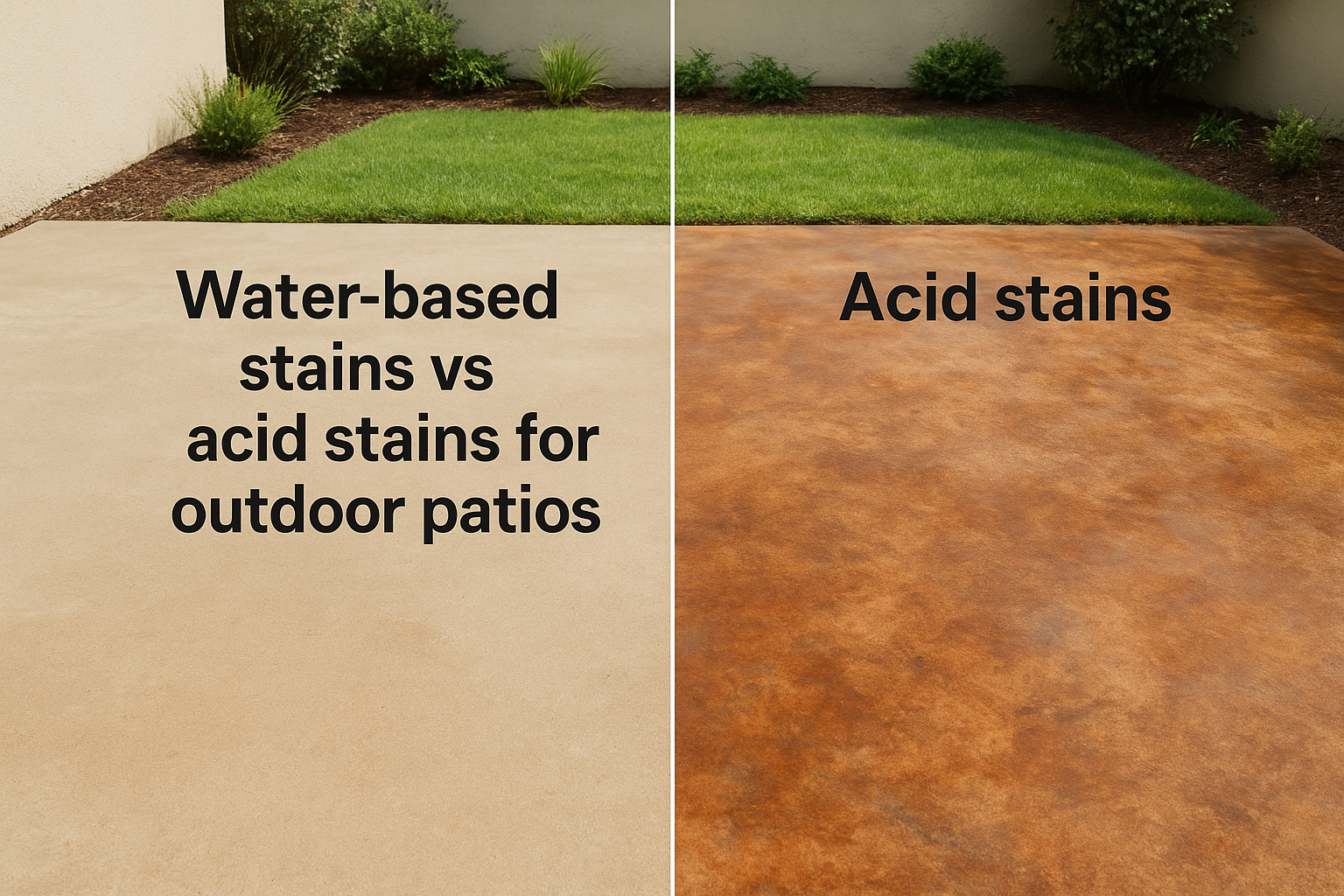
Water-based stains apply in a wider range of colors and dry predictably, while acid stains react chemically with the concrete to produce mottled, earthy tones that look natural and varied. Acid stains suit patios where some surface character already exists in the slab.
What staining can and cannot hide
Staining enhances surface tone and variation but does not conceal cracks, spalling, or significant contamination from oil or rust. Surface flaws stay visible after application, which makes the existing condition a key factor before you commit.
Staining works best as a finishing upgrade, not a repair solution, so address structural issues first.
How to choose a sealer for UV, rain, and stains
A UV-stable polyurethane or polyaspartic sealer protects the stain from fading under Florida sun and seals out moisture during rainy season. Solvent-based sealers offer stronger UV resistance than water-based versions outdoors.
Safety and traction on a sealed surface
Sealed surfaces get slick when wet. Adding an anti-slip additive to your sealer coat keeps the patio safe during Florida’s summer downpours without changing the appearance noticeably.
Best candidates and when a coating works better
Your patio suits staining when the concrete is structurally sound and relatively clean. Choose a coating instead if you need to cover significant surface damage or heavy color inconsistency.
Typical cost range and expected lifespan
Staining and sealing runs $2 to $4 per square foot in Southwest Florida. Reseal every one to two years to maintain color protection under sustained UV exposure.
6. Pavers over an existing concrete slab
Installing pavers over your existing slab is one of the most durable and visually distinctive concrete patio resurfacing options available. Rather than coating the surface, you’re adding a completely new material layer that can transform your outdoor space without the cost of demolition or excavation.
How installers build a paver surface over concrete
Installers clean and level your slab, then set pavers in a mortar bed or on a sand-set system with edge restraints holding everything in place. The existing slab acts as a stable structural base, which eliminates excavation costs entirely and shortens the overall project timeline.
Paver types that perform well in Florida conditions
Concrete and travertine pavers both hold up well in Southwest Florida’s sustained humidity and heat cycles. Travertine naturally stays cooler underfoot and resists the surface mold that can develop on some concrete paver finishes over time.
Drainage and edge restraint details that prevent shifting
Edge restraints and properly spaced joints allow rainwater to drain rather than pond on the surface, which protects the installation during heavy wet season downpours. Without this detail built in from the start, pavers shift and lift quickly.
Skipping edge restraints is one of the most common reasons a paver installation fails within the first two years in Florida.
Traction, heat feel, and barefoot comfort
Lighter-toned, tumbled or brushed pavers stay cooler and grip better than smooth, dark options. That difference is noticeable when you’re walking barefoot across a sun-drenched patio in July.
Best candidates and red flags that require slab repair
Your slab works as a base when it’s structurally sound and relatively flat. Active settling or large structural cracks require repair before any paver installation begins.
Typical cost range and long-term upkeep
Pavers installed over concrete typically run $10 to $20 per square foot in Southwest Florida. Plan for periodic joint sanding and sealing to prevent weed intrusion and keep the surface looking sharp long-term.
Choosing the best resurfacing option
The right choice from these concrete patio resurfacing options comes down to three factors: the current condition of your slab, how much maintenance you’re willing to commit to, and the look you want. A structurally sound slab opens up every option on this list. An actively cracking or settling slab narrows your choices significantly until you address those structural issues first.
Budget matters, but it shouldn’t be your only filter. Cheaper options like staining or spray coatings require reapplication sooner, while pavers and polymer overlays carry higher upfront costs but hold up longer under Florida’s sustained heat and moisture. Matching the product to your actual situation protects your investment and prevents you from repeating the process in a few years.
If your patio is ready for a real upgrade, contact CHC Concrete for a free on-site estimate. We work with homeowners across Fort Myers, Cape Coral, Estero, and Bonita Springs to find the right fit for every slab.