


If you’ve searched for pool deck resurfacing near me, you’re probably staring at a deck that’s seen better days, peeling coatings, faded color, rough patches, or cracks spreading from years of Florida sun and rain exposure. You’re not alone, and you’re smart to start researching before picking up the phone.
At CHC Concrete, we resurface pool decks across Fort Myers, Cape Coral, Estero, and Bonita Springs. We see firsthand how quickly Southwest Florida’s UV, humidity, and heavy downpours break down pool deck surfaces that weren’t installed or maintained correctly. That experience is exactly why we put this guide together, to help you make informed decisions before hiring anyone.
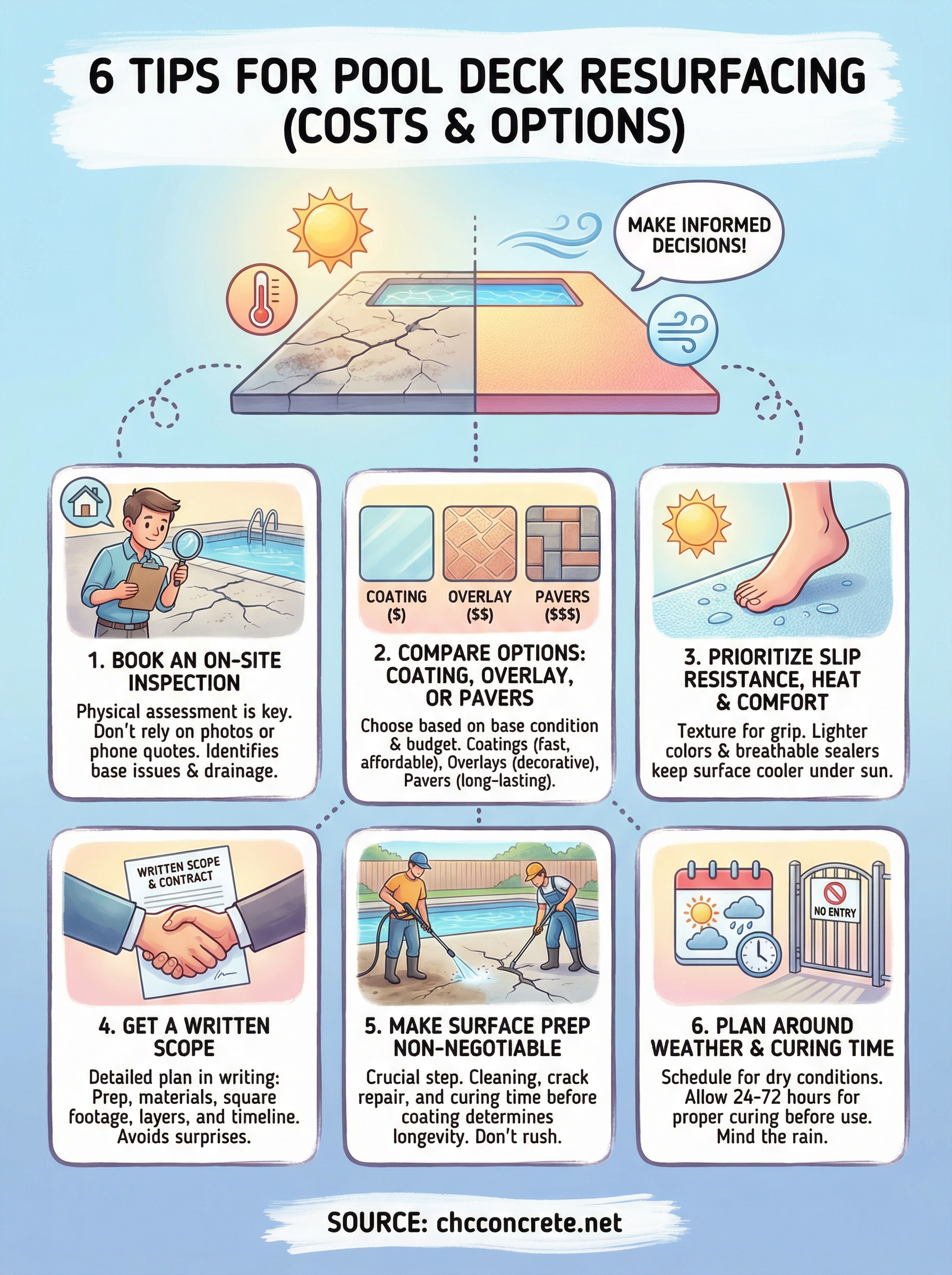
This article covers six practical tips for getting your pool deck resurfaced the right way, including what materials hold up best in our climate, realistic cost expectations, and what to look for (and avoid) when choosing a contractor. Whether your deck needs a full overlay or just a fresh finish, these tips will help you spend your money where it actually matters.
1. Book an on-site inspection with CHC Concrete
Before you commit to any materials or sign anything, you need someone who can physically look at your deck and tell you what’s actually going on. Photos and online estimates miss too much, especially in Southwest Florida where base condition, drainage setup, and UV damage all vary from yard to yard.
What this tip means
When you search for pool deck resurfacing near me, you’ll find contractors who are happy to quote you over the phone. That’s a shortcut worth avoiding. Every deck has its own set of problems: some are peeling because the coating was applied too thin, others have cracks that go deeper than the surface, and some have drainage issues that will ruin any new finish within a year if they’re not fixed first. CHC Concrete offers free on-site inspections so you get an accurate picture of what your deck actually needs before any money changes hands.
An in-person inspection is the only way to catch structural issues that a photo simply won’t show.
Questions to ask during the walkthrough
Use the inspection as a chance to gather real information. A good contractor will walk the full deck with you, not just glance at it from a distance. Here are the key questions to ask:
- What is the condition of the existing surface, and does it need full removal or just preparation?
- Are there any cracks, soft spots, or drainage problems that need to be fixed before resurfacing starts?
- Which materials are best suited for your sun exposure and foot traffic levels?
- What does the prep process look like, and how long will the whole job take?
Cost and timeline impact
Getting an inspection done before you hire anyone can save you hundreds of dollars in surprises later. If a contractor skips this step and gives you a flat price over the phone, they’re guessing, and that guess rarely works in your favor once hidden damage shows up mid-job.
Early identification of cracks or base failures also shifts the project scope before any deposits are paid, turning what looks like a two-day coating job into a properly staged repair-and-resurface project with enough curing time built in to actually last.
2. Compare resurfacing options: coating, overlay, or pavers
Not every deck needs the same fix. When you’re searching for pool deck resurfacing near me, the right material depends on what your current surface looks like and how you plan to use the space. Picking the wrong system wastes money and creates problems faster than the original surface did.
What this tip means
Three main systems handle most residential pool deck resurfacing jobs: acrylic coatings, concrete overlays, and paver installations. Coatings are the most affordable and fastest to apply, but they work only when the concrete underneath is structurally sound. Overlays bond to existing concrete and allow for decorative finishes and texture changes, making them a strong middle-ground option. Pavers involve removing or covering the existing surface entirely and give you the longest-lasting result, though at a higher cost.
How to choose the right system for your deck
Your choice should be driven by the current condition of your concrete and your budget. A few questions narrow it down quickly:
- Is the base concrete cracked or shifting, or is it solid?
- Do you want a decorative finish, or is function your main goal?
- How long do you plan to stay in the home?
Cost and timeline impact
Coatings typically run $2 to $5 per square foot, overlays land between $5 and $10, and pavers can reach $15 or more. Timeline ranges from one to three days for coatings up to a week for full paver installations.
Choosing the wrong system for your deck’s condition is the most common reason resurfacing fails within the first two years.
3. Prioritize slip resistance, heat, and bare-foot comfort
A pool deck has one job: hold up under wet feet and Florida heat without becoming a hazard. When you’re looking into pool deck resurfacing near me, surface texture and material color should be near the top of your checklist, not an afterthought you circle back to once everything else is decided.
Texture and sealer choices that change traction and heat
The finish you choose directly controls how safe and comfortable your deck feels underfoot. Broomed or brushed finishes add grip without feeling rough, while knockdown textures give you a softer surface with solid traction. Smooth finishes look clean but get slippery fast once water hits them. On the heat side, lighter colors and breathable sealers reflect more UV and stay significantly cooler than darker surfaces baking under direct afternoon sun. Many homeowners underestimate how much a sealer choice affects daily usability during Florida summers.
In Southwest Florida, a dark, smooth pool deck can reach temperatures that are painful to walk on barefoot by mid-morning in summer.
Cost and timeline impact
Choosing the right texture and sealer combination adds little to no cost compared to a standard resurface, but it protects you from having to redo the work ahead of schedule. Specialty cool-deck coatings run slightly higher, usually $1 to $2 more per square foot, but they extend comfort through the hottest months and slow down UV degradation considerably over time.
4. Get a written scope that matches your deck’s problems
A verbal agreement is not enough when it comes to concrete work. Before any pool deck resurfacing near me project begins, you need a written scope that spells out exactly what work gets done, on which surfaces, and with which materials.
What this tip means
A written scope protects you from scope creep, last-minute cost additions, and contractors who forget what they promised once the job starts. It should describe every step of the job in plain language, from crack repair and surface prep through the final sealer coat. If it is not in writing, it did not happen.
A vague estimate that lists only a final price is a warning sign, not a starting point.
What a good estimate should include
When CHC Concrete provides an estimate, it ties every line item back to the specific conditions found during the inspection. A solid written scope should cover:
- The existing surface condition and what prep is required
- Materials being used, including brand or product type where relevant
- Square footage being addressed and any exclusions
- Number of coats or layers and expected cure time between each
- Payment schedule and what triggers each payment
Cost and timeline impact
A detailed written scope also gives you a clear baseline for comparing bids. When two contractors quote different prices, the scope tells you whether they are quoting the same job or cutting different corners. Reviewing this document carefully before signing saves you from disputes and incomplete work after the fact.
5. Make surface prep non-negotiable
Surface prep is where most pool deck resurfacing near me projects fail before the first coat ever goes down. If the existing surface is dirty, flaking, or structurally compromised and a contractor skips or rushes the prep work, the new finish will separate from the base and peel within months, sometimes weeks.
Prep steps that decide whether it lasts or peels
Proper prep starts with pressure washing the entire deck to remove dirt, algae, and old sealer that would prevent a new coating from bonding. After washing, any cracks, chips, or hollow spots need to be filled and allowed to cure before anything goes on top. On older decks, grinding or scarifying the surface gives the new coating something to grip. Skipping any of these steps is the fastest path to a failed resurface.
The quality of the prep work, not the quality of the coating, determines how long your resurfaced deck actually lasts.
Cost and timeline impact
Good prep adds one to two days to a project, and that time is worth every hour. Rushed prep might shave a day off the schedule, but it typically leads to premature peeling and full redo costs within one to two years. Budget prep as a fixed, non-negotiable line item in your written scope, and treat any contractor who minimizes it as a contractor worth walking away from.
6. Plan around Southwest Florida weather and curing time
Timing matters more than most homeowners realize when scheduling pool deck resurfacing near me. Southwest Florida’s rainy season, afternoon storms, and intense UV create a narrow window where conditions are actually right for coatings and overlays to cure correctly.
What this tip means
Rain within 24 to 48 hours of application can ruin a fresh coating before it bonds fully to the surface. Scheduling your project between November and early May gives you the best odds of dry conditions and manageable temperatures. Summer jobs are possible but require tighter coordination with your contractor around daily weather patterns.
Concrete coatings applied during a rain event or on a surface still damp from morning humidity will fail faster than a poorly prepped deck.
Access, safety, and when you can use the pool again
While the deck cures, the area needs to stay completely clear of foot traffic and pool equipment. Most coatings need a minimum of 24 to 48 hours before light foot traffic, and full cure takes up to 72 hours depending on the product and humidity levels. Plan for your pool to be off-limits for at least three to four days from the final coat.
Cost and timeline impact
Scheduling around weather does not add cost, but ignoring it does. A coating that fails due to rain or early foot traffic means a full redo. Build buffer days into your project calendar and confirm your contractor checks local forecasts before starting any pour or coating application.
Ready to Get Your Pool Deck Back in Shape
Your pool deck doesn’t have to stay cracked, peeling, or unsafe. These six tips give you a clear path forward whether your deck needs a simple coating refresh or a full overlay with proper drainage work underneath. The key is starting with a real inspection, choosing materials that match your specific surface and climate, and treating prep work and curing time as fixed requirements, not suggestions.
When you’re ready to move forward with pool deck resurfacing near me, CHC Concrete is available to walk your property, assess what your deck actually needs, and give you a written estimate at no cost. We serve Fort Myers, Cape Coral, Estero, and Bonita Springs, and we build every job around Southwest Florida’s specific conditions so your results hold up through heat, rain, and daily use. Contact CHC Concrete today to schedule your free on-site inspection and get an accurate picture of what your deck actually needs.