


Stamped concrete can transform a plain driveway, patio, or walkway into something that actually turns heads, but only if it’s installed correctly. A bad pour or a rushed stamp job? That’s a problem you’ll be staring at (and paying to fix) for years. Searching for a stamped concrete contractor near me is the easy part. Choosing the right one takes a bit more effort.
Here in Southwest Florida, the stakes are even higher. Sandy soil, heavy rain, and relentless UV exposure mean your stamped concrete needs to be engineered for the environment, not just poured and forgotten. At CHC Concrete, we’ve seen firsthand what happens when homeowners in Fort Myers, Cape Coral, and surrounding areas hire contractors who skip critical steps. Cracking, fading, and peeling are just the start. Proper base preparation and curing aren’t optional here; they’re what separate a job that lasts from one that falls apart.
So before you sign a contract or hand over a deposit, read these five tips. They’ll help you spot the professionals, avoid the common traps, and make a hiring decision you won’t regret. Whether you’re planning a new patio, pool deck, or driveway, this checklist applies.
1. Start with a licensed local pro like CHC Concrete
Licensing isn’t a formality, it’s the baseline for any serious concrete work. When you search for a stamped concrete contractor near me, confirm that whoever shows up at your property holds a valid state contractor’s license and carries both general liability and workers’ compensation insurance. Get that confirmation before you discuss scope, pricing, or timelines.
Confirm licensing, insurance, and what it covers
Ask the contractor to provide their license number and verify it directly through the Florida Department of Business and Professional Regulation. Then request a certificate of insurance that names you as an additional insured. If a worker gets injured on your property and the contractor carries no coverage, that financial liability can fall on you as the property owner.
Unlicensed contractors may quote a lower price, but they have no accountability if the work fails, and you have no legal recourse without a contract tied to a licensed business.
Check local experience with Southwest Florida soil and weather
Southwest Florida’s sandy, shifting soil and intense seasonal rainfall create conditions that punish shortcuts. A contractor from outside the region may not account for base depth, drainage slope, or UV-resistant sealing the same way a local pro would. Ask how many jobs they’ve completed in Fort Myers or Cape Coral, and specifically ask about their base preparation approach for local soil conditions.
Ask what stamped concrete services they handle in-house
Some contractors subcontract the decorative stamping work to a third party, which splits accountability and quality control across two crews. You want a contractor who handles the pour, stamping, coloring, and sealing with their own trained team. When one crew owns the entire job, you get cleaner results and a clear point of contact if corrections are needed.
2. Compare bids by scope, not just the lowest price
When you gather bids from a stamped concrete contractor near me, the lowest number on the page rarely tells the full story. Two quotes for the same project can differ by thousands of dollars because one contractor cuts corners on materials, thins the slab, or skips base preparation entirely. Price without scope is meaningless.
Ask for a line-item scope with materials and labor
Request a written breakdown that separates labor, materials, and any additional fees. A clear line-item bid lets you compare proposals on equal terms rather than guessing what each lump-sum price actually includes.
Verify base prep, reinforcement, and thickness in writing
Your slab’s base depth and reinforcement method directly affect how long it holds up. Make sure the bid spells out compacted subbase thickness, rebar or wire mesh placement, and the minimum slab thickness for your specific project type.
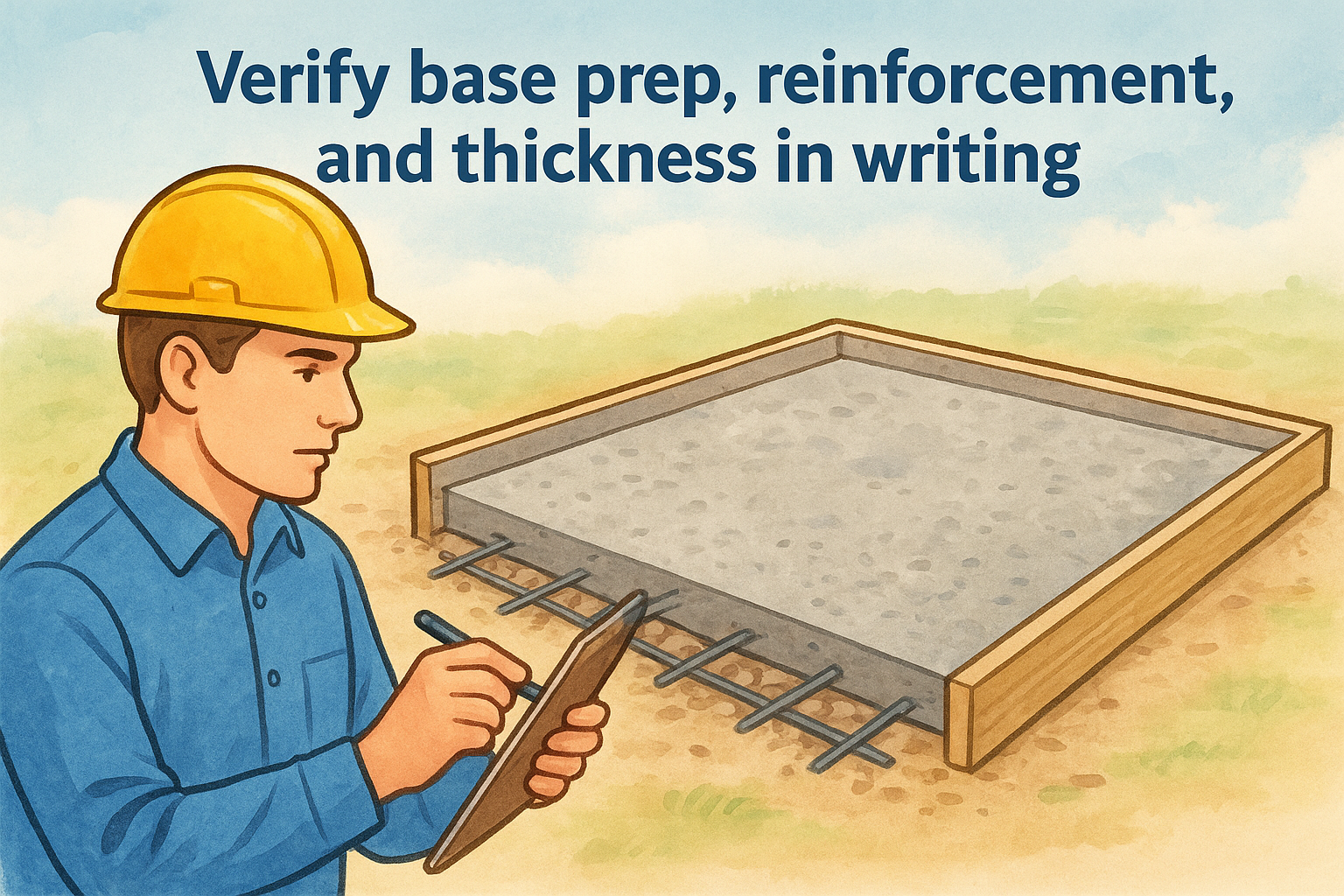
A contractor who won’t put base prep details in writing is telling you something important about how they approach their work.
Confirm curing, sealing, and a realistic timeline
Curing and sealing are not optional finishing touches; they protect your investment. Ask the contractor to specify the curing method and sealing product, and confirm the number of days before the surface handles foot or vehicle traffic.
3. Verify workmanship with real examples of stamped concrete
Any stamped concrete contractor near me worth hiring will show you real completed projects, not just stock photos or renderings. Proof of past work tells you how the contractor handles pattern consistency, color saturation, and long-term finish quality before you commit.
Review photos of similar projects and finishes
Ask specifically for photos of driveways, patios, or pool decks that match your project type. Look at whether the stamps align cleanly at edges and seams, and whether the color release and base coat look uniform across the surface.
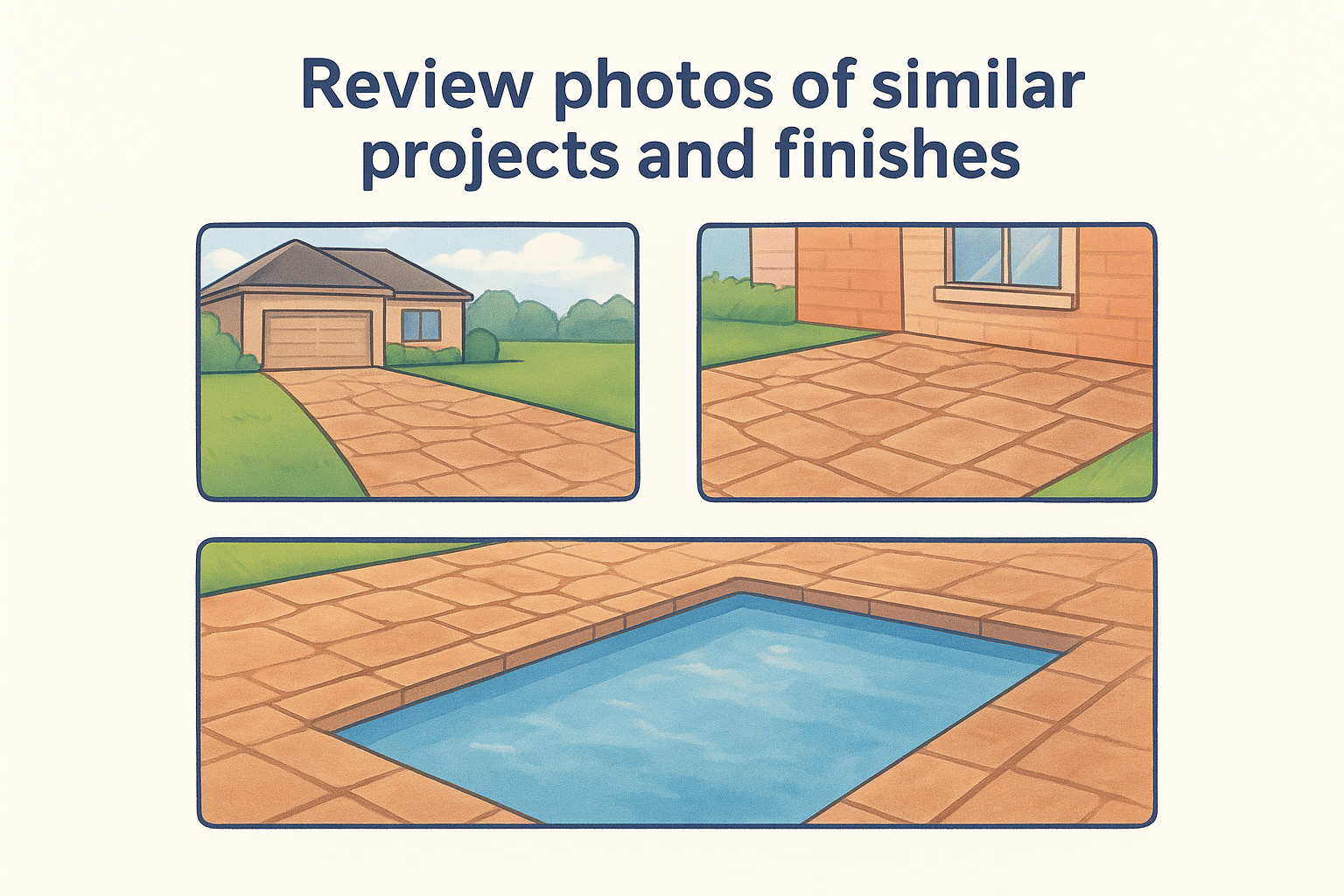
A contractor who can’t produce at least five to ten finished project photos is likely short on experience.
Inspect details that reveal quality on any job you can see
Edges, corners, and transition points are where stamped concrete either holds up or shows weakness. If you can view a completed job in person, check for tight joints, clean borders, and consistent depth in the stamp pattern across the full slab.
Ask how they handle color matching and pattern alignment
Color fading and misaligned stamps are two of the most common complaints homeowners file after installation. Ask the contractor how they manage integral color ratios and stamp sequence across large pours to keep the finished surface looking intentional.
4. Ask technical questions that prevent costly problems later
When you interview a stamped concrete contractor near me, the technical details matter as much as the price. Asking the right questions before work starts protects you from expensive failures after the job is done.
Make drainage and slope part of the plan from day one
Your contractor should plan the slope of every slab before pouring starts. In Southwest Florida, standing water after heavy rain accelerates surface damage and creates slip hazards. Ask for a minimum slope specification and confirm it’s built into the job plan, not added as an afterthought.
A contractor who hasn’t addressed drainage before the pour has already made a costly mistake.
Choose the right texture for slip resistance and comfort
Texture selection affects both safety and heat absorption on your finished surface. Coarser stamp patterns hold grip better in wet conditions, while lighter color choices and brushed finishes reflect more heat underfoot. Ask your contractor which texture and color combinations perform best for your specific outdoor use.
Lock in the joint plan to control cracking
Control joints direct where concrete relieves stress, keeping cracks away from the center of your surface. Ask the contractor to specify joint spacing and depth in writing before the pour begins, not after the slab sets. Common joint spacing for residential flatwork runs every 8 to 10 feet, though your contractor should adjust that based on slab thickness and local soil conditions.
5. Protect yourself with a clear contract and payment plan
A verbal agreement means nothing when a dispute happens. Before any stamped concrete contractor near me starts work, get a written contract that covers every relevant detail from scope to cleanup.
Put scope, exclusions, and change orders in writing
Your contract should spell out exactly what work is included and what is excluded. Any change to the original scope should require a written change order with updated costs before work continues. At minimum, your contract should cover:
- Exact square footage and layout boundaries
- Materials, finishes, and color selections
- What triggers a change order and the required approval process
Set payment milestones tied to progress, not promises
Never pay the full amount upfront. Structure your payment schedule around verifiable milestones, such as subbase completion, pour completion, and final sealing. This keeps both parties accountable and gives you leverage if workmanship issues surface mid-project.
A contractor who demands full payment before starting work is one worth walking away from.
Confirm permits, HOA rules, and jobsite cleanup expectations
Ask your contractor to confirm whether permits are required and who is responsible for pulling them. Also clarify your HOA approval requirements if applicable, and get written confirmation that the crew removes all debris before final payment clears.
Confirm that cleanup responsibilities include concrete splatter, excess material, and formwork removal from all adjacent surfaces and landscaping.
Your Next Step
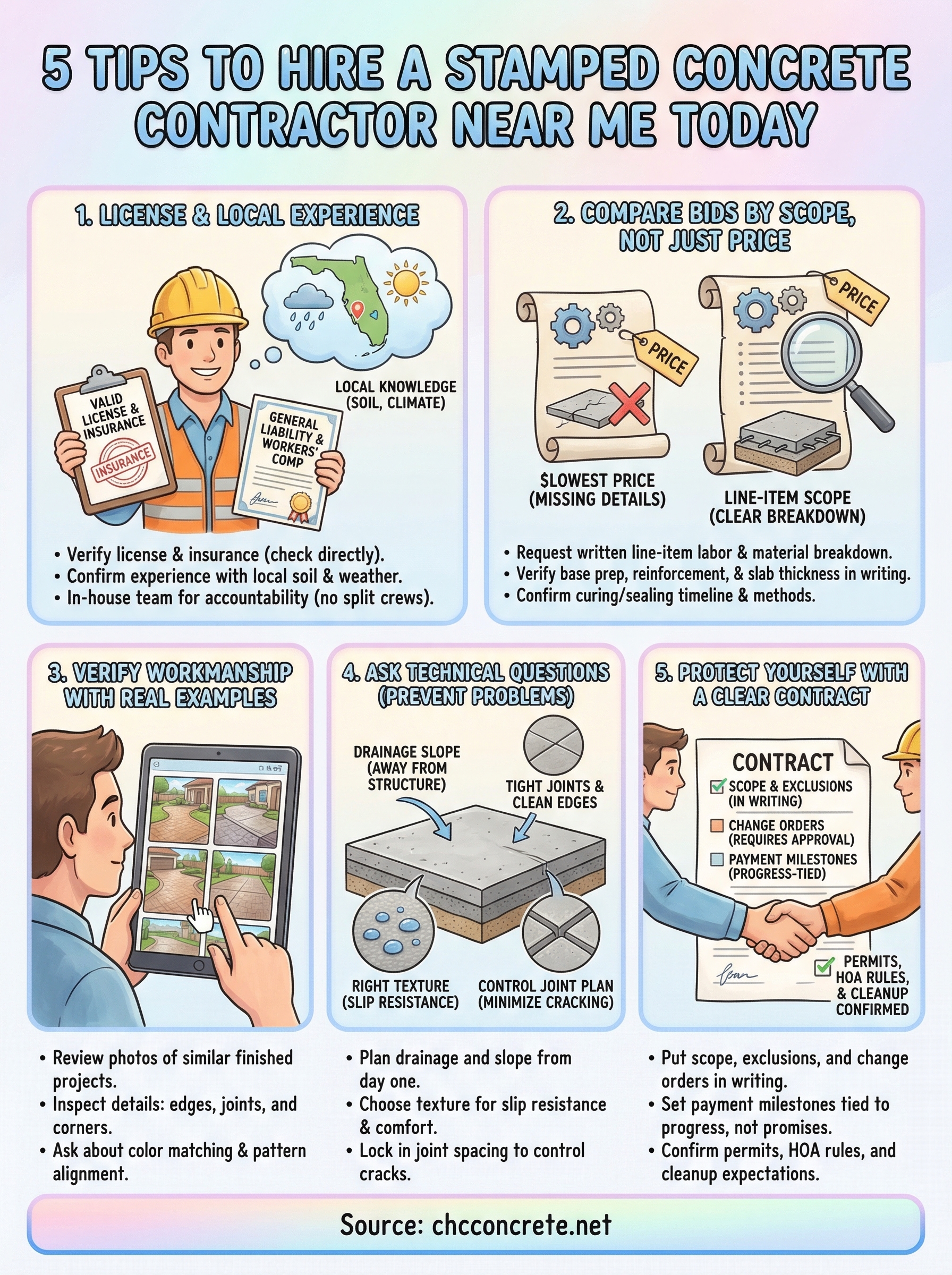
These five tips give you a clear framework for evaluating any stamped concrete contractor near me before you commit to a contract. Licensing, scope verification, proof of past work, technical planning, and a solid payment structure are not nice-to-haves; they are the baseline for any project worth doing in Southwest Florida’s demanding climate. Skipping even one of these steps is how homeowners end up with cracked slabs and contractors who won’t return calls.
CHC Concrete serves Fort Myers, Cape Coral, Estero, and Bonita Springs with licensed, insured stamped concrete installation built specifically for local soil and weather conditions. Every project gets proper base preparation, engineered drainage, and a full curing process, no shortcuts taken at any stage.
Your stamped concrete should hold up for decades, not just a few seasons. Request a free estimate from CHC Concrete and talk through your project with a local pro who knows exactly what your slab needs to last.